Category Archives: Protecting our Environment

Western New Hampshire Mountain and Lakes Region Still Under Threat

In voting that wasn’t a surprise to most people involved closely in the issue of encroaching wind power and transmission line projects, the NH House Science, Energy and Technology Committee voted to retain most of the bills related to those projects.

Garnering the most controversy and attention lately was House Bill 580 that would have stopped all power infrastructure construction in the state immediately upon passage.  Representative Rappaport requested an “ought to pass” on the bill with vocal support from Representative Khan, Representative Bradley and Representative Vadney.  While Representative Babar spoke of reservations about the wording of the bill, but the most vocal resistance to the moratorium idea came from Representative Nicholas Levasseur.  Levasseur seemed to speak a straight industry line, saying that the moratorium will “send a bad message” to businesses that New Hampshire is “fickle” in their support of business decisions.

Representatives Bradley, Khan and Vadney spoke in favor of the bill.  While some said that they felt that retaining the bill for study over the summer will give the legislators time to consider the issue of wind power more carefully, many reps disagreed.  Rep. Vadney said that  prime New Hampshire areas, such as the Newfound Lake region are currently threatened with pending turbine construction that without a moratorium, could in fact come online very soon.  He said that he has his doubts that without the moratorium there would be any way to stop such activity, “I worry it will be too late before we come up with an energy policy if we retain, important sites are under threat now.”

Rep. Bradley also weighed in on the issue, speaking from his military background saying that one thing he learned was the value of deadlines and also the value of delay, that when in doubt oftentimes a delay is the best option to avoid mistakes.

Representative Nicholas Levasseur made the final weigh-in, responding that the RPS (Renewable Portfolio Standard) mandate may not be met, that business will lose interest in investing in the state and that the SEC process will assure that delicate regions will not suffer damage or destruction.

All bills relating to the electrical power infrastructure in the state were referred to retention which means that the bills will remain within the committee for study.  There was discussion of setting up a sub-committee to take on the task of doing more research on the issues that the bills bring up and formulating more substantial bills or one bill to handle these contentious issues.

The following is a summary of the bills and some of the discussion that went before related to electrical infrastructure development, specifically wind power and transmission lines.  The respective votes up or down are listed as well.  Each bill is linked for further information:

HB 166 – “An act requiring the public utilities commission to make specific findings as to the public need for proposed transmission lines.”   Motion to retain – passed unanimous

HB 449“…requires the site evaluation committee to consider economic impact and findings and recommendations from local planning boards or governing bodies prior to issuing a certificate for an energy facility.”   Motion to retain – passed with Rep. Bradley voting no

HB 484“requiring public approval prior to issuance of certain site evaluation certificates…” Motion to retain – passed with Rep. Bradley and Rep. Calli-Pitts voting no

HB 568requiring new elective transmission lines in New Hampshire to be buried.  Rep. Rappaport moved for “ought to pass”, Reps Khan, Murotake and Bradley voted yes.  Rep. Nicholas Levasseur, Rep. Vadney and Rep. Pasteur urged a no-pass saying the issue needed more study.  Motion for passage defeated.

Rep. Townsend made motion to retain the bill – passed with no votes from Rep Khan and Bradley

HB 569requires that all electric transmission lines in the state of New Hampshire be placed within state transportation rights-of-way to the extent possible.” Motion to retain – passed, Reps Bradley, Khan, Murotake and Reilly voted against.

HB 580establishes moratoriums on the construction of wind turbine plants and on electric transmission line projects until the state issues a comprehensive energy plan.”

Motion to retain by Backus who said, “I believe that issues that underlie this bill merit consideration and retention.”  Reilly, the author of the bill said he supports retention to avoid a possible loss on the whole floor.  Vote was taken, motion to retain passed with the following voting against retention: Rep. Khan, Rep. Rappaport, Rep. Vadney, Rep. Bradley.  Rep. Babar made the general statement, “citizen input is important” possibly in reference to wanting to hear more from his constituents on the issue.  Rep. Richard Levasseur wanted to know if the reference to power lines in the moratorium included Northern Pass or if it just referred to power lines related to the wind turbines.

HB 586establishes a one-year moratorium on new and pending applications for certificates for electric transmission facilities.”   Motion to retain – Rep. Khan, Bradley, Borden and Vadney voted against, motion passed.

At this point the committee will be in session tomorrow to discuss options such as setting up a sub-committee to work the bills.  This is the time to call your representative in your area, to discuss the importance of preserving the western highlands of New Hampshire and the White Mountain region.  The link below will get you to your representative.  Also important is to talk to members of the committee that are on the fence on this issue and let them know how that you cannot destroy the environment in order to save it.

NH General Court – Who Is My Representative?

Tagged , , , , , , , ,

Urgent Action Needed Now!

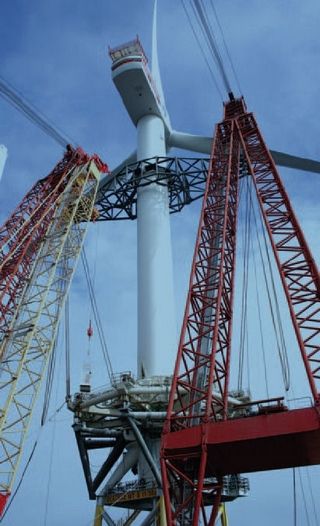
This Tuesday, March 5 at 1pm the New Hampshire House Science, Technology and Energy Committee will vote on two important bills effecting New Hampshire environmental and energy future: HB 580and HB 484wind turbine under construction

Both of these bills relate to the expansion of wind turbines in the western and northern regions of the state. Both of these bills currently rest in committee.  A large portion of representatives considered “retaining” the bills which essentially means they sit without action for an indefinite period — while energy industries continue unabated with their development within currently outdated and insufficient guidelines and rules.

We urge people to call the committee members and their house representatives to tell them to pass these two bills and get them out of committee and onto the house floor for a full vote.  Click on the link below for a full listing of committee members with links to their email address and telephone numbers.  Most NH Reps are very responsive to citizen inquiries and will answer phones and emails promptly and always will read them.

House Science, Technology and Energy Committee

Senators in support of or acting sponsors of the HB 580:

Sen. Jeannie Forrester – sponsor

– Sen. Jeff Woodburn – supporter

HOUSE BILL 580 proposes a moratorium on any further construction of wind turbines or transmission lines.  Linked above, the bill text is short and to the point.

A moratorium on any further construction or approval of transmission lines (as originally intended by the bill’s authors) and wind turbine development will allow communities and all stakeholders a chance to develop stricter and more appropriate guidelines for renewable energy development.  Industry has threatened that the renewable energy time table will be lost causing the RSP to spin out, they have threatened that they will leave the area, never to come back again if they don’t get what they want now.  They also threaten that federal tax credits will soon expire, presumably never to be resurrected again.  None of these claims have any basis in reality.

Ironically committee members expressed their desire for more information on the issue, many of them stating that they just didn’t have all the facts. Without the moratorium, the SEC will continue its approval process unabated and the people will not have the information and the facts so desperately needed on this issue.

The wind turbine industry has threatened that waiting will cause them to look elsewhere; that a wait signals ‘bad to do business in New Hampshire’.  Seems rather disingenuous when at the same time industry lobbyists say that they have the communities’ concerns at heart, that they are confident of the quality and sustainability of their product and that they will work with communities.

HOUSE BILL 484 sets parameters for the SEC to consider aesthetic issues relating to the placement of structures, particularly their visibility “without amplification by the human eye”.  Most importantly HB 484 will add to the existing SEC rules of RSA 162-H the following regarding public input:

6 New Section; Public Approval. Amend RSA 162-H by inserting after section 10 the following new section:

162-H:10-a Public Approval.

I. The site evaluation committee shall determine whether any part of any structure of any proposed project is visible without amplification to the human eye from public property in a particular city or town. Its determination shall be based on information provided in the application and any change in or amendment thereto, any petition filed under RSA 162-H:7, VII, at any public hearing, and in any other balanced way deemed appropriate by the committee.

II. For each city and town in which the committee finds in the affirmative and for which a petition under RSA 162-H:10, VII was submitted, a vote shall be taken in such city or town at the next regular meeting of its legislative body. The question before the voters shall be as follows: “Are you in favor of the state approving the energy facility project proposed by ________________ for the city/town of _____________, specifically a [insert “power plant,” “windmill farm,” etc.] off _______________ road?”

III. The town or city clerk shall certify to the site evaluation committee the result of the vote in his or her community, and the committee shall total the votes for all participating communities taken together.

IV. No proposed project shall be granted a certificate where the total of the negative votes of all participating cities and towns taken together exceeds the total of the positive votes; provided, however, that such a certificate may be granted if subject to the condition that no part of any structure of the proposed facility is visible without amplification to the human eye at any time or season from any public property.”

LET THE SEC DO ITS WORK:

When this writer talked to some members of the committee, the trust in the SEC and its process was remarkable.  But assumptions can be dangerous.  Currently the rules that govern the SEC (Site Evaluation Committee) fall under RSA 162-F and RSA 162-H and deal mostly with traditional power generation plants such as gas, coal and nuclear.   Unfortunately although the wind industry has developed on some small scale within New Hampshire there exists no firm guidelines for the SEC to follow regarding the development of wind energy in the state.  In 2007 a group of industry experts and other stakeholders put together a proposal of guidelines for wind, but the SEC has failed to adopt the proposed guidelines.

An amendment was proposed by Bob Backus (d) and Susan Arnold of the Society for the Protection of New Hampshire Forests (SPNHF) that would demand that the the committee recommend that these guidelines be updated and adopted by the SEC.  But this amendment was proposed as a compromise to the resistance of some members of the committee to move on a moratorium.  While the updating and adoption of the 2007 rules is needed, many see this as still allowing a loop hole through which current applicants can jump through.  The amendment fails to mandate that all applications stop until further research and updating is complete.

At the working session last Tuesday an industry rep for PSNH spoke of her familiarity with the working group that drew up the 2007 guidelines, noting “I was around then.”  She noted that the process took at least a year.  Can we or should we depend on the industry to be willing to wait a year or more for the new guidelines to come online? Can we have faith that they will not pressure the SEC to continue their current permitting process and allow development unabated?

One has to wonder if the SEC is willing or ready to deal with the complex issues of wind energy if they have not bothered to adopt or even request an update of the proposed guidelines of 2007.   Most markedly, if one bothers to scan the guidelines, it is clear that the working group admits that they have only a small amount of data to go on and that further study on the issue of wind energy generation is urgently needed and that was in 2007!

THE SEC PROCESS:

Many of the representatives in the committee pointed to the “Antrim Decision” as proof that the SEC does in fact do their job in hearing out a communities concerns and will rule accordingly.   Unfortunately, as was pointed out in testimony at the February 19th hearing in Representative’s Hall by an Antrim resident and activist, it took four long hard years for the community to come together — all volunteer — to combat the paid wind industry lobbyists.   It is worth noting as well that Antrim was the only town that was able to stop a wind project from gaining SEC approval even though numerous projects have gone online over the years, not all with shining success.   Groton Wind Farm, LLC (Iberdrola satellite) already has caused problems that are currently pending before the SEC.  Although the issues, placement of buildings and poor road maintenance are disturbing in and of themselves, most troubling is Iberdrola (in this instance Groton Wind Farm, LLC) seems to demonstrate poor management if not outright dishonesty in its practices.

The rules governing the SEC process, 100-300 spell out in detail the process by which hearings are held.  It is clear from reading the guidelines that general court procedure is followed with rules of discovery, cross examination and petition by the public or “interveners” that may be cumbersome and difficult to navigate for those not legally trained.  HB 484 gives more direct empowerment to communities at least on the issue of site placement a more direct and democratic process.

TRULY GREEN OR JUST ‘GREEN WASHING’?

You know, the “green” packaging at stores, touting that a product has a better carbon footprint of some competitor, that a product’s production used less energy or that a small portion of the product’s content is made up of recycled material?  Ever cynically wonder if all that is really true or just a lot of fluff? Ever stop to consider that possibly there’s a certain irony to a company making a profit off of increased consumption while calling itself ‘green’?

In our haste to reduce greenhouse gas emissions we must examine all options carefully and intelligently.  Enough data exists from wind turbine energy production around the globe to draw serious questions that must be answered.  The core cause of our current environmental crisis has more to do with past ignorance of the grave costs of energy generation to our environment and health.  It seems that now in the 21st century we should have the wisdom to know that the first order of business is to all options consider carefully. While wind energy may not, in the simple view produce CO2, many portions of its construction do:

– wind turbine sites require extensive deforestation for access roads and maintenance buildingsas one person notes on windeffects.org, deforestation removes vital natural environmental scrubbers for CO2 gas.

– the irregularity of energy generation by wind requires backup from traditional fossil fuel resources in order to balance out its lackluster and irregular contribution to the power grid.

– wind power can only provide an efficiency of around 10-17%, figures of 30% efficiency touted by the industry constitute only the highest efficiency in the best conditions, such is never consistently provided by wind.  In fact the only locations in New Hampshire where turbines might have a “good” to “moderate” rating are on the tops of currently valued and protected mountaintop ridgelines.

– wind turbines as proposed for New Hampshire and elsewhere are expected to tower at 454′, requiring footings as large as 20′ square, some estimates are as high as 60′ x 20′ deep.  The excavation required for any footing is always far larger than the footing itself, so consider this estimate conservative for the destruction of landscape.  This is particularly important when considering the ‘bony’, that is rocky terrain of New Hampshire.

– currently EPD Energy has plans to move forward on a project that will directly impact the Mount Cardigan State Park and the surrounding towns.  Mount Cardigan is a popular tourist destination and part of the Appalachian Mountain Club’s system of with a lodge that hosts nearly 8,000 overnight guests a year and maintains a network of trails throughout the western region.  It is estimated that the Mount Cardigan trails serve over 15,000 hikers a year in all seasons.  EPD energy’s proposed wind installations will sit directly on current trails impacting this vital gem of New Hampshire’s western region.

– the owner of the Rumney Village Store recently told this writer that his business jumps up 600% in the spring and summer months as tourists come to enjoy Newfound Lake, Rock Rumney and the surrounding mountains and hills in the area.  They don’t come to walk wide deforested access roads to wind turbines.  While a few turbines may not be intrusive, an industrial wind “farm” of nearly 500′ turbines planted close together along ridgelines with access roads to each carved out of the forest is quite another matter.

Newfound Lake, a popular destination spot nestled in the western mountains of the state. Prime real estate, natural recreational areas and resources are threatened by wind farms proposed for the area.

Finally, the elephant in the room when discussing energy use and generation is conservation.  The acceptance of the paradigm of expanded consumption to drive economic expansion and profit must be challenged at its root.  While the reduction of greenhouse gasses in the production of energy must continue, this cannot carry on in a vacuum.  The time when energy was seen as cheap and easy has come and gone; manifest destiny has played out.  We’ve drilled, blasted, dug, carved, scraped and soiled our planet to the point where we lay on the precipice of near destruction.

In addition, in the vein of continued consumption and individualized technology we’ve become more disparate and more disconnected from our communities and ourselves.   Our national government has become enmeshed with global corporate power on a level never before seen.  Disconnected from local communities and their needs, giant corporations intrude on communities to exploit the local citizenry and extract their resources, whether natural or human, for their own profit, returning little if any benefit back.  Sustainability for the future must consider the long term health and growth of a community — for its own sake, not for the profit of a few large companies that will inevitably leave the unprofitable mess for the community to deal with.

For further information see links below:

windeffects.org

NH Windwatch.org

Wind: The Whole Truth

Wind Turbines Show How Costly Free Can Be : Minnesota Public Radio

Wind Power’s Dirty Secret: Its Carbon Footprint: KATU.com, Portland Oregon

Tagged , , , , , , , , , , , ,

“Say No to Wind Turbines” — and Yes to Global Warming I suppose?

Although this as published in June, it still is prescient.  Currently there exists a small contingency of folks in the Western part of New Hampshire protesting wind farm proposals.  Already some windmills can be seen from far and wide in that area, perched as they are on the tops of mountains in the area, such as ones on Tenney Mountain.But, as unsavory and violating that the wind-farms may be on the mountain tops, the protests must provide alternative areas/locations for the development of alternative and renewable energy.  Otherwise, the campaign simply amounts to a gimme for the oil, gas, hydro and nuclear industries that wish to stall any development or support for any renewable energy projects.

In that vein and while doing research on this topic, we stumbled across this very cogently written opinion by Bradley Dibble, MD from his blog Comprehending the Climate Crisis.

Enjoy.

Posted on June 18, 2012

If I were to propose a new product for the marketplace to be used for human consumption, it would need to be rigourously assessed to confirm its safety first. If I described my new product as having the following properties, what do you think would be its chances of getting approved?

—it’s addictive, not just habit-forming
—it’s known to cause or aggravate the following health conditions: heart disease, oral cancer, lung cancer, esophageal cancer, bladder cancer, emphysema, chronic bronchitis, asthma, and low birth weights in children
—all of these occur when the product is used exactly as intended, not just when abused in excess. In addition, non-users who are exposed to it secondarily are also at increased risk for these same diseases

It’s no secret I’m describing cigarettes. Simply put, cigarettes have no redeeming features. My patients who smoke describe that it relaxes them, but that’s misleading. What they’re truly experiencing is going through nicotine withdrawal when they feel that relaxing effect, essentially getting their next “fix.” Nicotine is a stimulant, not a sedative. Anyone who’s addicted to a substance suffers when they go without it too long.

It’s fair to say that if cigarettes were introduced today, they’d never stand a chance of being approved for public use. But since they’ve been around for centuries, we’re stuck with them for now. There’s a certain degree of regulation (e.g. kids aren’t supposed to smoke them), but despite the jobs associated with the tobacco industry and the taxes generated from the sale of cigarettes, none of that will ever compensate for the costs to society in health care alone with so much death and disease that they cause. New products introduced into society are forced to prove their safety before they’re approved, even though other products out there are clearly unhealthy for us.

We face something similar with wind turbines. This weekend my family and I drove to Priceville, Ontario to get our new puppy. (You don’t know where Priceville is, you say? Well, it’s just on the other side of Flesherton!) On the way driving through Grey County, I was amazed at the number of signs protesting wind turbines. Most farms we drove by had signs on their properties urging people to “Say No to Wind Turbines.” They often had other comments too like “Foul Wind” and “Say Yes to Turbines, Say No to Visitors.” They all listed a website at the bottom of the signs for Wind Concerns Ontario.

I checked out the website when I got home. It’s amazing to see how many references they have listing how bad wind turbines are for society. I wanted to check some of the information out and given that I have some expertise in health care as a physician, I clicked on the health tab on the website’s home page to see what was listed there.

There were a number of categories for health concerns listed including noise, mental health, stress, and sleep disturbance. I checked out the first six links I could click on that were meant to elaborate on these topics and was surprised to see that none of them worked. They all had “Error 404 – page not found” errors. The next two links worked but both went to the same slide show and without the words of the speaker to go along with the slides, it didn’t provide much useful information.

The next ten references were to articles in a peer-reviewed journal, the Bulletin of Science, Technology & Society (August 2011 31 issue). In fact, every one of them referenced this particular issue. As someone well-versed in science, I can tell you that having some variety in scientific references is a much more robust way to support an argument rather than having everything coming from one particular issue of one particular publication. But I guess they have to get their sources where they can and this particular journal does it for them. (According to the webpage, it seems the current issue is from December 2011. I don’t know if that means they’re on hiatus or only publish intermittently. I’d never heard of this journal before so I’m not sure.)

There may well be some health concerns with wind turbines, and I appreciate that further study will be helpful to elaborate those further. But can they really argue that the health concerns from using fossil fuels aren’t a problem? (Later this week I’ll have a blog post dedicated to this very topic, so stay tuned.)

Even if we ignored global warming and the future climate crisis we’re destined to experience if we continue with business-as-usual, do they not realize that smog, pollution, acid rain, and ozone depletion create havoc with our environment and our health? Many of the diseases caused or aggravated by these problems are cardiovascular so as a cardiologist, perhaps I’m more sensitive to the issue than other physicians might be.

The health concerns about wind turbines are on par with the health concerns about any new product being introduced into the market today. They’re like a new pharmaceutical agent that could prevent heart attacks and strokes. But if that new agent leads to an increase in liver cancer, for example—even a small one—it might not make it to market. It’s often a forest-for-the-trees situation.

I started out this post by describing how cigarettes would never be approved for use if introduced into society today, but because they’ve been around for centuries, they’ve gotten away with it. Fossil fuels are like cigarettes in our society. Long-entrenched, they’ve been in use for hundreds of years. So despite the known health concerns with fossil fuels, they’re too much a part of our civilization to do away with very easily.

I guarantee you if both wind energy and fossil fuels were being introduced today, wind energy would win out over fossil fuels. Fossil fuels have the advantage of having been introduced long before regulations would ever explore their risks, or anyone ever expressed safety concerns associated with them. And now it’s too late to do so, and yet safer options like wind turbines will have a lot of people protesting against them.

These protestors simply can’t see the forest for the trees. It’s a fact those who argue against wind energy conveniently forget.

Tagged , ,

Burn for a Buck

A wildfire in Australia crosses the Princes Highway on Tuesday. No deaths related to the fires have been reported in the country.
HELL ON EARTH: AUSTRALIA FACES UNPRECEDENTED WILDFIRE “CATASTROPHE”

Proving that the in-your-face reality of unfettered climate change is not about to recede in the new year, a national disaster is unfolding only days into 2013 in Australia, where rampaging wildfires are burning huge swaths of the country. Australians are used to the annual “bushfire season,” but the recent string of massive fires that have charred millions of acres and killed dozens of people are unprecedented and only getting worse thanks to climate change. Now the nation faces a fire “catastrophe”; not just a lurid term of description, it is an official designation of the most destructive and serious level of wildfire. This year’s violent eruption of blazes are fueled by temperatures quite literally never seen before in Australia, with all-time record heat baking the country.

(Mother Jones)

`

SCIENTIFIC PREDICTIONS OF SEA LEVEL RISE MAY HAVE BEEN “SERIOUSLY UNDERESTIMATED”

Holding nearly 100 percent of the world’s glacier ice, Greenland and Antarctica are the “air conditioners” of Earth and also a ticking time bomb of potential devastation. This is because of climate change and the rapid polar warming now being recorded that has surpassed many previous estimates of what was possible. With temperatures rising faster and instances of massive ice melt already experiences this past year, scientists now say that global sea level rise from ice loss in these two regions has been “seriously underestimated.” The total melting of Greenland and Antarctic ice would boost global sea levels by over 200 feet. While no one expects that apocalyptic catastrophe, experts now confirm a sea level rise of several more feet than previously anticipated is likely by 2100, causing immeasurable damage and disruption across the world.

(UK Independent)

(All via Principled Progressive)

Of course where the picture comes from (CBS News online), the Australian weather change is referred to “milder”.  Obviously that’s an understatement as we can see here.

Of course here in New England, in the middle of January, the one layer of snow fall we’ve had is already melting down to reveal soft, unfrozen earth underneath and we’re expecting higher spring-like temperatures this weekend:  5-day

Yes, there are idiots who will chime in, “Well I’m just enjoying the good weather!”  apparently completely oblivious to the natural life cycle up here that depends on freezing ground, snow cover and long term cold in order to prepare for a good spring and summer season following.  It seems that the average American has begun to think that the earth and seas are as solid and dead as a slab of concrete or asphalt, but they aren’t.

Not only could (or does) climate change radically change environments by killing off species of animal or insect life, it also dramatically changes agricultural production and existing plant-life because of the lack of the old “killing frost”, as biologists said in an abstract for an article available here, “The main effect of temperature in temperate regions is to influence winter survival; at more northerly latitudes, higher temperatures extend the summer season, increasing the available thermal budget for growth and reproduction.”

The intro to a World Bank sponsored report on climate change and its effects on world agricultural production are telling and this was written in 2003:

“Climate change is widely agreed to be already a reality, and its adverse impacts on the vulnerability of poor communities are superimposed on existing vulnerabilities.  Climate change will further reduce access to drinking water, negatively affect the health of poor people, and will pose a real threat to food security in many countries in Africa, Asia and Latin America.  consequently, the World Bank is moving towards mainstreaming climate risk in all its work, and integrating climate-change adaptation, where appropriate, in projects, strategies and policies. We believe this is necessary to ensure the effectiveness of our investments in poverty eradication and sustainable development.”

This report ironically was written in America by mostly Yale academics; America, where we still consume nearly the majority of the world’s resources and participate in the global financial machinery that runs the consumptive engine that drives global warming.

Here in New Hampshire, as reported often, but not often enough for people to listen, such projects as the Northern Pass electrical line project and the proposal to sit windmills on the western mountains do not feed existing need.  They exist to provide the forecast infrastructure that will arise out of increased global warming.  Yes, that’s right.  The power lines and the windmills all will exist to provide for anticipated increased demand in electrical service.  (Read here for extensive information and research documentation or our past article on Northern Pass) Increased demand specifically anticipated for the “cooling season” when people will be baking under the increasingly heated earth.

What happened to the idea that capital will make us all safe and sound? Where’s the invisible hand to sweep in and save us from burning up slowly, starving to death, watching our towns drown in the sea or scrambling with thousands of fleeing refugees?  At what point will capital come in and bring some sense to the shareholders who sit at the boards of these corporations who decide that their dividend share means more to them than the public welfare?

While the majority of the world lives on a small fraction of what the developed world lives on and while we know that most of what we use and consume we really don’t need, we continue on our path.  We have been sold a bill of goods; that mindless consumption feeds our economy and that our economy feeds the economy of other countries because we put people to work.  But the facts tell a different story; that our needless consumption in piles of plastic throw-away goods, needless travel in individual gas-powered vehicles and the northeast’s stubborn refusal to give up fossil fuel based heating are killing billions of people and the planet.

But of course the money pumped by capitalists to provide disinformation campaigns serves to obscufate and confuse the issue and the people who will suffer the effects of global warming if nothing is done to change the current trajectory.  The bleating of the combined efforts of the oil, gas, coal and nuclear energy consortiums usually go something like this headline and tagline from a article out of the Spectator on 1/04/12:

“Wind farms vs wildlife: The shocking environmental cost of renewable energy

Why is the public not more aware of this carnage? First, because the wind industry (with the shameful complicity of some ornithological organisations) has gone to great trouble to cover it up – to the extent of burying the corpses of victims. Second, because the ongoing obsession with climate change means that many environmentalists are turning a blind eye to the ecological costs of renewable energy.”

Because of course, renewable energy hurts more than the fossil fuel consumption now currently in use.  Again, where is the invisible hand?  Locked behind someone’s back and wrapped around a bundle of currency we’d hazard to guess.

Capitalism represents an outdated, outmoded and now nearly out-run system that threatens to slowly strangle us in our own capital based consumption, unless of course we as a people begin to take the steps to change their habits and their priorities.  Capital will not save us; we will.

Tagged , , , , ,

Tipping Point: The End of Oil – Free Film Showing and Action Planning

The documentary film Tipping Point: The End of Oil will be shown free on January 13th at the Wilton Town Hall Theater in Wilton, NH.

After the film a planning/discussion session will take place to talk about possible direct actions in the near future in New Hampshire around the issues brought up in the film.

Everyone is encouraged to attend!

Sponsored by the NH Green Coalition and 350.org nh

Wilton Town Hall Theater

Clueless Chambers of Commerce in Nashua and Manchester Don’t Support Their Communities or People

powerlines in hondurass reported below by a writer to of a letter to the editor, the Chambers of Commerce of the two largest cities in New Hampshire have come out in support of Northern Pass.  Even though its commonly known that not one town or city in New Hampshire will benefit from the raping of the White Mountains, clueless lackeys to the power companies vote their own interests above those of the community.

Manchester and Nashua CofC endorsements: Wave as the power goes by your cities
December 5, 2012
Nashua Telegraph
Chambers criticized over Northern Pass
 Letter to the Editor
Two southern New Hampshire chambers of commerce have endorsed the proposed Northern Pass project, disregarding the protests of their fellow residents to the north, where the project would be most visible and have enormous environmental and economic consequences.
The Manchester and Nashua chambers have endorsed Northern Pass because they are enthusiastic about lower electricity rates for businesses, and green and renewable electricity. They, unfortunately, listened to Public Service of New Hampshire’s marketing claims, which are pure fantasy.
Any cost benefit from Northern Pass only would go to ratepayers outside New Hampshire that get their power from the regional electric markets. In New Hampshire, PSNH customers would see little benefit because their energy rates are tied to propping up PSNH’s inefficient coal- and oil-fired power plants.
Is Northern Pass green, renewable energy? Northern Pass electricity would be provided primarily from industrial hydro-electricity in northern Quebec. No environmental agency inside or outside of New Hampshire endorses large hydro as green or renewable.
The purported 1,200 jobs PSNH promised? That claim was debunked in a report by the New England Power Generators Association.
So why have these two chambers been so willing to throw the residents and businesses of the North Country under the bus by endorsing a project that disproportionately would harm the north so that those in the southern tier would reap these bogus benefits?
Could it have anything to do with how many PSNH top executives sit on their boards?
Julie Moran


Tagged , , , , , , , ,

Sierra Club and 350.org Rally Washington

The Sierra Club and 350.org rallied in Washington DC on the 18th of this month to draw attention to the XL Pipeline for which construction is already underway and activists are putting up a long battle on the ground against.

In New England, the Trailbreaker Tar Sands pipeline also proposed, but unfortunately, the focus seemed to be mostly on the XL line.  The struggle against both pipelines is ongoing.

See story here, Big Tar Sands Rally in Washington

Tagged , , , , , ,

Updates on Northern Pass

Found this in our mailbox, sent from Bury Northern Pass, updates on the latest goings-on around the issue of the transmission lines that PSNH and Hydro-Quebec wants to pass through the White Mountains including the National Forest.

Burial bill
Nov. 22, 2012
NHPR’s Chris Jensen reports.
A North Country legislator is proposing a law that would require new electric utility lines to be located along existing highways.
If Rep. Larry Rappaport’s bill become law, utility companies would be required – as much as possible – to put new electric transmission lines alongside state rights-of-way such as highways.
Rappaport, of Colebrook, contends that would have two benefits.
“The roads are already there.”
 It would also help the state with its budget problems.
“That will mean that the money which would be obtained by leasing or renting or whatever would accrue to the state of New Hampshire as opposed to private, for-profit companies.”
That could affect the Northern Pass project.
Under the current arrangement Hydro-Quebec would provide the electricity.
Then, it would pay Northern Pass to transmit it along a route Northern Pass developed through the state.
If the law passes Rappaport says Hydro-Quebec would pay tens of millions of dollars a year to New Hampshire and not Northern Pass.
Yale
Northern Pass Leases Coos Land Linked To Yale
NHPR’s Chris Jensen reports.
Nov. 21
The Northern Pass Transmission project has taken a big step forward in its search for a route through the North Country – with some help from Yale University.
Northern Pass has signed a deal allowing it to put transmission lines along 20 miles through eastern Coos County.
In a statement Public Service of New Hampshire president Gary Long described the arrangement as “a huge step for the project.”
However, the statement did not say if Northern Pass has all the land it needs.
The land was leased from Wagner Forest Management on behalf of the owner, Bayroot LLC.
Bayroot LLC is an investment linked to Yale University, according to 2009, 2010 and 2011 filings with the IRS.
A Yale spokesman said the university does not discuss its investments.
The Coos County Democrat reports that the  lease allows transmission lines to be either above or below ground.
Northern Pass gains another 20 miles of right-of-way for towers
By PAULA TRACY
New Hampshire Union Leader Nov. 23
CONCORD – Developers of the Northern Pass electricity project said this week they have cut a deal for 20 miles of needed right-of-way from Dixville Peak toward Stark in Coos County.
Public Service of New Hampshire President Gary Long called the leasing of Wagner Woodlands land a huge step for the project that would deliver electricity from Hydro-Quebec through New Hampshire and into the New England power grid.
“This brings us closer to our goal of delivering clean, low-cost hydropower to the region’s energy grid while providing New Hampshire with hundreds of new jobs and millions in new tax revenue,” Long said in a statement.
“This project not only brings significant economic benefits to our state, but will also have a tremendous environmental impact as well by removing 5 million tons of carbon from our atmosphere.”
The Society for the Protection of NH Forests, which had hoped to strike its own deal for the Wagner land, maintains that it can still block the 180-mile high-power transmission project. Forest Society spokesman Jack Savage said it is seeing more money coming in to preserve private land in the Stewartstown area.
Savage acknowledged, however, that the society had failed to meet its self-imposed deadline to raise $2.5 million for the blocking effort. He said it was a “somewhat arbitrary deadline of the end of October.” It has raised about $1 million to date.
The Society used some of that money to buy an easement on a Balsams tract of more than 5,000 acres, which abuts the land managed by Wagner Woodlands.
The Lyme-based Wagner company works on behalf of its client and property owner, Bayroot, a timber management organization. It essentially funds pensions by timbering.
Tom Colgan, Wagner’s president and chief executive officer, said the Northern Pass complements its forest management and that Wagner is pleased to help bring to the region “a major new source of clean and renewable energy.”
No financial information was offered about the deal, which was posted on the Northern Pass website Tuesday.
The $1.2 billion project to bring 1,200 megawatts of hydroelectricity into the New England grid is proposed by PSNH parent Northeast Utilities. It would transmit power on 140 miles of existing right-of-way but needs to link together 40 miles of North Country real estate to connect with the existing infrastructure in Groveton.
Savage of the Forest Society says regulators consider it a private transmission development not necessary for the New England grid and he questions the “clean” claim because of the flooding of Canadian lands to develop the hydro power.
Comments:
Susan Schibanoff said:
In other words, more (but different) rich folks in Connecticut are trying to rip off Coos County and NH. This time they’re in New Haven, not Hartford — Yale Univ. investments are linked to Bayroot/Wagner (see NHPR). And Yale’s colonial NH forest administrator at Wagner, Tom Colgan, mouths false green pieties about “clean” big hydro to justify the exploitation. (King George III probably said something to the same effect that it was beneficial to steal all the white pines from New England to keep the Empire afloat.) It’s time to stand up, NH, and demand autonomy from the forces in New Haven, Hartford, and Montreal that want to strip NH of our economic independence and our ability to determine our own way and quality of life. There’s a new governor and many new legislators in NH. Let them know what you think. Now. If NU and Hydro-Quebec get through overhead this time, it’s just the beginning.
Tom Colgan, Wagner Forest CEO, on feeling good at the end of the day
“[Our foresters] want to feel good at the end of the day about what they’re doing, about how they’re working, and what they accomplished in the woods. They are locals. They have to live with what they do every day and have to live with the community.” –Tom Colgan, President and CEO, Wagner Forest Management, at a Yale Forest Forum, 2002. (http://environment.yale.edu/gisf/files/pdfs/yff_reviews/05.03.pdf, p. 18)
It’s so much easier to tell the truth: fallout from the Q3 investor call
In a lame attempt to cover for NU’s Tom May, who made bizarre claims in the Nov. 13th Q3 investor call, Martin Murray has offered equally far-fetched explanations. According to Murray, May didn’t say that Northern Pass has the support of every environmental organization in New England; May said they support Cape Wind. May didn’t say that ISO-NE was a big proponent of Northern Pass; May said ISO-NE is a big proponent of fuel diversity (an equally questionable claim). May didn’t say that Maggie Hassan is supportive of Northern Pass; May said “if” she is supportive of Northern Pass. . . .
Exec’s Statements On Northern Pass Challenged
NHPR’s Chris Jensen reports.
Last week at a conference in Arizona a top official at Northeast Utilities provided an update on the Northern Pass Transmission project.
But some of his statements are being refuted.
The industry conference was for electric utility companies, analysts and those interested in the business.
In one session Thomas J. May, the president and CEO of Northeast Utilities spoke about his company’s Northern Pass project.
“This project has the support of every environmental group in New England, basically.”
That came as a huge and infuriating surprise to some of the region’s major environmental groups.
Jack Savage is with the Society for the Protection of New Hampshire Forests, which opposes the project.
“Well, I thought at best Mr. May was irresponsibly misinformed.”
Christophe Courchesne, is a lawyer for the Conservation Law Foundation, which opposes the project in its current form.
“We’re not aware of any groups that support the project.”
A Northern Pass spokesman didn’t respond when asked for a list of environmental groups May said were supporting the project.
May also puzzled some people with a comment about ISO New England, which operates the region’s high-voltage power grid and wholesale electricity markets.
“ISO New England, which is responsible for our reliability and keeping the lights on to a great degree are very concerned about capacity and the need for increased fuel diversity. So, they have been a big proponent of this project.”
But ISO New England spokeswoman Marcia Blomberg said the group has not taken a position on Northern Pass.
May also suggested there is good news ahead when Governor-elect Maggie Hassan takes office.
“There is a new governor in New Hampshire that we believe is supportive of the project.”
However, Hassan spokesman Marc Goldberg said Hassan “is not supportive of the initial proposal” and “any new proposal should undergo rigorous review and address concerns of the communities involved.”
Finally May told the group that the governor of Connecticut – where Northeast Utilities is based – is behind the project and will go to some lengths to help.
“Governor Malloy has been very outspoken about it and has suggested he would go to President Obama to help us with the licensing on this project.”
Andrew Doba, a spokesman for governor Dannel Malloy, said the governor thinks Northern Pass could be a good thing for the region.
But, he said, the governor did not offer to speak to President Obama about it.
 
Comments:
James Doyle
Thank you for stating the record and refuting addressing the disinformation tactics.
Northern Pass official under fire over assessment of project’s support
By ANNMARIE TIMMINS
Monitor staff
Thursday, November 22, 2012
Several environmental groups say a Northern Pass official grossly misrepresented the project’s standing in New Hampshire at a financial investor conference last week by claiming the groups and Gov.-elect Maggie Hassan support the project. The official says his comments are being twisted to hurt the project.
Tom May, chief executive officer of Northeast Utilities, which is behind the $1.1 billion Northern Pass project, told conference attendees that the proposed hydro-power project would bring more environmental benefits to New England than any project before it. He also said that his company believes Hassan supports the project when she has publicly said she has some concerns about it.
“We believe New Hampshire will recognize the value of this project to them,” May said.
But most controversial was this statement: “It’s a pretty big environmental impact,” May said, according to a recording of his remarks available on the internet. “And this project has the support of every environmental group in New England, basically.”
That’s untrue – if May was talking about Northern Pass, as environmental activists say he was.
But Martin Murray, a Northern Pass spokesman, said Tuesday that May was not referring to Northern Pass in that last statement. He said May was instead referring to the offshore Cape Wind energy project in Massachusetts. Murray said Northern Pass officials are aware of objections raised by environmental groups.
The proposed Northern Pass, introduced in 2010, is a partnership between Northeast Utilities, Public Service of New Hampshire and Hydro-Quebec. The project would bring hydro-power through New Hampshire and into the New England energy grid along 140 miles of high-voltage transmission lines.
North Country opposition
The project has been delayed by opposition, especially from North Country landowners and environmental groups. In response to that opposition, the Legislature this year passed a law prohibiting a private project like Northern Pass from taking land by eminent domain.
From Goveton south, the Northern Pass lines would run in the existing power line clearings maintained by PSNH. Project officials have struggled to build the northern 40 miles of the route, which will require new clearings. Several miles of transmission lines would run through the White Mountain National Forest.
Project officials are buying land now with plans to unveil the full route by the end of the year.
In his conference remarks last week, May did refer to Cape Wind but only once. And he had returned to discussing Northern Pass before he mentioned the support of environmental groups. He was speaking at the annual Edison Electric Institute Financial Conference in Arizona.
“I think you have to consider Mr. May’s comments, at best, irresponsibly misinformed,” said Jack Savage, spokesman for the Society for the Protection of New Hampshire Forests, which is trying to raise $2.5 million to block the project. The group has raised more than $1 million from 1,200 donors in 178 New Hampshire cities and towns, Savage said.
The society is going to use that money raised to put conservation easements on two parcels along Northern Pass’s likely path. The group hopes to put conservation easements on three additional parcels. Savage said the environmental objections have been no secret to May.
“You can go to Northern Pass’s own project journal and see references to us, the Appalachian Mountain Club and the Conservation Law Foundation as three environmental groups that clearly do not support Northern Pass as proposed,” he said.
Susan Arnold, AMC’s vice president for conservation, said she didn’t know of a single New England environmental group that does support Northern Pass. “The Appalachian Mountain Club does not support the Northern Pass project as proposed and we have been very public about our concerns,” Arnold said in an email. “We are mystified as to where Mr. May gets his information.”
Christophe Courchesne, an attorney with the Conservation Law Foundation in New Hampshire, disputed May’s statements in a lengthy blog post on the foundation’s website, clf.org. He also posted a link to a recording of May’s comments.
“It was extremely disappointing that Northeast Utilities continues to take the approach of repeating false and misleading information,” Courchesne said in an interview Tuesday. “And this time, it’s not even colorably accurate.”
The Monitor listened to the recordings of May’s remarks several times Tuesday.
He began by saying Northern Pass was making good progress. He said the project’s timing is “critical” because ISO-New England, which oversees the supply and demand of the New England energy market, has been looking for more energy diversity in the market.
Northern Pass would introduce 1,200 megawatts of hydropower to the New England market, which currently relies heavily on natural gas, nuclear energy and oil. May said ISO-New England has “been a big proponent of this project.”
An ‘elective’ project
Marcia Blomberg, a spokeswoman for ISO-New England, said Tuesday that the organization has not taken a position on the Northern Pass. ISO-New England has said previously that Northern Pass is an “elective” energy project that is not needed to “keep the lights on” in New England.
Asked about May’s statement, Murray said May was saying only that ISO-New England is encouraging a diversity of energy sources and that hydro-power would do that.
May next said that Northern Pass would lower energy prices in New England.
“No other project that anyone has considered in our region has anywhere near the economic or environmental impact that this project has,” he said. May said “people are suggesting” that the project could lower energy prices in the region by $200 to $300 million annually.
“The environmental value, there is no project that is anywhere near or a series of projects that have anywhere near this impact,” May said. “Many of you have heard about the Cape Wind project. This has six to seven times more environmental value in it.”
May then said Northern Pass would lower carbon fuel emissions in the region to a degree that the drop would equal taking 900,000 cars off the road annually. Then May made the comment that environmental groups have criticized.
“So, it’s a pretty big environmental impact,” May said, “and this project has the support of every environmental group in New England, basically.”
Jobs, tax revenue
May spoke next about the 1,200 jobs and the $25 million in property taxes Northern Pass is predicted to bring New Hampshire. He said he’d been in Quebec two weeks earlier meeting with his Canadian partners.
“I believe that we’re both very anxious to get going on this project now that the elections are over and now that there is a new governor in New Hampshire that we believe is supportive of the project, and we can start to bring our case before the people of New Hampshire once again.”
Tuesday, Murray disputed that version of May’s remarks. He said May couched the remark by saying “if there is a governor in New Hamsphire that is supportive.” The Monitor did not hear the comment that way.
Unwavering position
And during her campaign, Hassan said the project would need the support of local communities to get her support. She also said she would prefer to see the transmission lines buried, something Northern Pass officials have said is too expensive and impractical to consider.
Hassan’s spokesman said Hassan’s position has not changed.
“As a state senator, she worked to pass a constitutional amendment to prohibit the use of eminent domain for private gain, and she opposes the use of eminent domain for this project,” said Marc Goldberg in an email. (Northern Pass officials have said they don’t intend to pursue eminent domain.) “Gov.-Elect Hassan believes that we must protect the scenic views of the North Country, which are vital to our tourism industry and to protecting our quality of life. As governor, she will ensure that, in accordance with the law, New Hampshire undertakes a rigorous review process of any proposal and provide significant opportunities for public voices to be heard.”
Goldberg also said Hassan hopes that the next proposal will address the concerns of the communities involved.
“She believes that burying the lines would be a more appropriate approach, and also supports looking into home-grown energy sources, such as the new biomass plant under construction in Berlin,” said Goldberg.
Tagged , ,

Update: Support Grows for CLF’s Fight to Secure a Fair Review of Northern Pass

From the Conversation Law Fund site regarding the DOE and its corrupt decision making process involved in approving the Northern Pass project.

Update: Support Grows for CLF’s Fight to Secure a Fair Review of Northern Pass

Two weeks ago, CLF exposed and brought to the public’s attention internal government documents showing that the Department of Energy (DOE) has illegally allowed the developer of the Northern Pass transmission project, Northern Pass Transmission LLC (NPT) to have significant and improper influence over the ongoing permitting process and environmental review of the project. After filing its concerns about the information with DOE, CLF issued a call to action, urging the public to join CLF in demanding that DOE replace the contractor team charged with preparing the crucial Environmental Impact Statement (EIS), which was handpicked by NPT, with a new, unbiased contractor or internal team with no conflict of interest.

We’re pleased to report that the responses – your responses – to the revelations and our call to action has been remarkable.

In the past two weeks, more than 300 members of the public (and counting) filed comments with DOE demanding replacement of the contractor team and a new commitment to a fair and open permitting process for Northern Pass. (You can take action yourself and file your own comment via this link.)

Yesterday, in a joint letter to DOE, a group of nine organizations representing New Hampshire’s conservation community and the grassroots opposition to Northern Pass, along with more than 60 individuals, expressed their deep concerns about the information exposed by CLF and called for a new EIS contractor with no conflict of interest. (Coverage on NHPR here.)

Read more on the CLF blog.

Tagged , , , ,

FBI Labels Civil Disobedience Groups as “Domestic Terrorists”

Yes, because monitoring groups that support more accountability in government and corporate interests constitutes a real threat to the government that supports the people, no wait, that supports corporate interests, no wait, that supports the people’s interests in business, no wait…

Seems to point up the oft-quoted idea that the government really isn’t in the business of protecting democracy, but more in the business of protecting business.

RE-posted from Deep Green Resistance Indiana:

NEW YORK — According to new documents released today by the American Civil Liberties Union, the FBI is using counterterrorism resources to monitor and infiltrate domestic political organizations that criticize business interests and government policies, despite a lack of evidence that the groups are engaging in or supporting violent action.

The ACLU said that the documents released today on Greenpeace, People for the Ethical Treatment of Animals (PETA) and the American-Arab Anti-Discrimination Committee (ADC) show the FBI expanding the definition of “domestic terrorism” to include citizens and groups that participate in lawful protests or civil disobedience.

“The FBI should use its resources to investigate credible threats to national security instead of spending time tracking Americans who criticize government policy, or monitoring groups that have not broken the law,” said Ann Beeson, Associate Legal Director of the ACLU. “Labeling law abiding groups and their members ‘domestic terrorists’ is not only irresponsible, it has a chilling effect on the vibrant tradition of political dissent in this country.”

The documents were obtained by the ACLU after the organization filed Freedom of Information Act (FOIA) requests to discover whether the FBI’s partnerships with local law enforcement in Joint Terrorism Task Forces has resulted in increased surveillance of political and religious activity.

For more read Deep Green Resistance Indiana