Jeb Bradley Hikes With Eyes Closed

jeb bradley stampAn email we received from the kind folks at Bury Northern Pass reference the moratorium bill, SB-99.   Apparently the well known, avid hiker of the White Mountains, Jeb Bradley has decided that as long as he doesn’t have to live with giant high tension power lines in his backyard and he closes his eyes while hiking, he won’t have to see the results of his handiwork.  Hey as long as you can notch off another peak and claim yourself a member of the 4,000 footer club, who cares if transmission lines spoil the mountain experience?

Because of course, getting the support of PSNH, NSTAR and Hydro-Quebec, three of the large corporate utility companies frothing at their mouths at the potential profit for Northern Pass, is more important than representing the poor little people of your state, amirite?  According to the folks at DownWithTyranny, rubber stamping corporate agendas at the behest of the people’s interests and just generally being a corporate whore is nothing new to ‘ole Jeb.

SOMETHING’S ROTTEN IN CONCORD – A TRILOGY
 
POLITICS IN NEW HAMPSHIRE SINKS TO A NEW LOW! – PART ONE
 
by 
 
The Alliance against Northern Pass

CRONYISM REARS ITS UGLY HEAD –This past Wednesday, March 20th at the State House in Concord, honest, transparent  governance, what New Hampshire used to be famous for, took a back seat to cronyism.  Jeb Bradley, a member of the Senate Energy Committee considering Senate Bill 99 slipped a decidedly underhanded maneuver past the public and his fellow senators on the Committee using questionable, disrespectful parliamentary procedures.   In doing so, Bradley ignored the wishes of tens of thousands of Granite State citizens who wanted SB 99 passed in order to implement a one year moratorium to slow down the current breakneck pace of approving huge elective energy projects like Northern Pass and the proliferation of gigantic wind turbine fields.  The moratorium, if passed, was designed to give our state’s regulators the time and resources needed to properly vet these projects.  Our state needs to be sure that ALL optional energy projects, not needed to keep the lights on, truly provide a net benefit to New Hampshire’s businesses and residents, not just the energy companies’ stockholders, before they are given a green light by the state’s regulators.

WHAT’S AT STAKE? –It’s our state government’s obligation to make sure that the unblemished character of our state, especially north of Concord, so critical to our tourism based economy, is protected from an unsightly proliferation of wind turbines, power towers and cables that, once erected, will wreak havoc with the reasons why tens of millions of people come to visit our lakes, hills, rivers, mountains, and forests every year.  Tourism and its many components make up our state’s largest single industry.  Why mess up the beds we sleep in by destroying the magical nature of our surroundings that stimulate people to come here year after year after year?  The notion of messing up our landscapes with projects like Northern Pass for no net benefit to our state is tantamount to sheer, utter lunacy.
THE “FIX” WAS IN –One purpose of this news release is to make as many people in New Hampshire as possible, aware of how certain politicians in Concord are doing business, but this article is also meant to reach the Committee that heard Senate Bill 99 this past Wednesday.  Another objective is to call attention to the actions of one individual on that Committee, Senator Jeb Bradley, who was the person primarily responsible for the shameful performance that went on in Room 103 under the guise of being a so-called Committee Hearing.  Apologies in advance to the rest of the SB 99 Committee members who were hopefully not complicit in the pre-planned deceit and subterfuge that was inflicted on those members of the public who drove many miles, perhaps hundreds of miles in some cases, to attend a hearing where there was no intention by Bradley from the outset to pay any attention to what the voters had to say because “the FIX” was in before the meeting ever started.

(Part Two of the Three Part Trilogy Coming Soon)

FOOTNOTE – The title to this trilogy, SOMETHING’S ROTTEN IN CONCORD, is a phrase lifted from Shakespeare’s, “Hamlet” in which Marcellus says, “Something’s rotten in the state of Denmark.” In modern days, the phrase has come to mean “things are unsatisfactory; there is something fundamentally wrong.”

ALLIANCE AGAINST NORTHERN PASS
C/O POST OFFICE BOX 1732
CAMPTON, NH 03223
603-759-2510, Phone; 603-726-4897, Fax
CONTACT: Thomas N.T. Mullen, tntmullen@owlsnestgolf.com

Tagged , , , , , , , , ,

Top Ten Myths of Wind Power Generation

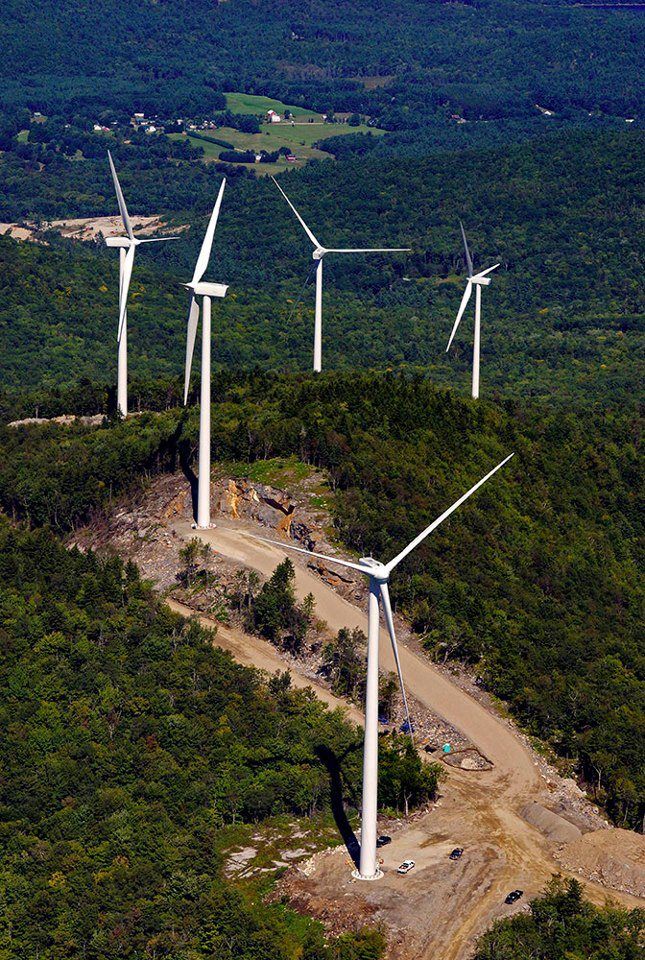
Iberdrola turbines on Tenney Mountain, NH

Iberdrola turbines on Tenney Mountain, NH

From the very interesting and informative site, Stop Ill Wind, we put up here for your perusal the well researched and thorough answer to the wind industry’s claims about their wind power plants.  In order to ensure that people will take the time to look through these, we have copied them here and linked each myth.  This took a lot of time, but we feel it was worth the effort; the wind industry, like all industrial giants with making a buck in mind, have lobbyists and marketing professionals working for them full time, for good pay.  A few hours assembling this for public information seems the least one should do.

It should be noted that although the writing focuses on wind turbine development efforts on the Northern eastern region from Maryland to Virginia and out to the mid-Atlantic regions, the similarities to the attack in New Hampshire cannot be ignored such as:

1. That the wind industry targets in-land areas with high ridge tops that are primarily low income and poorly developed economically.

2.  That the wind industry depends on such government incentives as double depreciation allowances, tax credits and lopsided lease contracts with private land owners which shelter them from liability and also guarantee an immediate profit even if actual output is marginal long term.

3.  That communities are promised income benefits, increased tourism and other glowing incentives which rarely materalize or are greatly exaggerated.

4.  That the number of jobs created, like long transmission line projects produce over the long-term only a couple low-wage, subsistence level maintenance jobs, that almost all skilled labor is imported to meet machinery warranties and that all jobs (besides the one or two maintenance personnel) last only on average about six months.

5.  That estimates and results of attitudes of potential buyers in areas affected to threatened with wind turbines decreases, causing damage to areas that all too often depend on their mountain top or ocean viewsheds for tourism and real estate dollars for local income.

6.  That the environmental destruction wrought by the construction and placement of wind turbines, with their attendant easements and buildings interrupts natural habitats, causing serious damage if not death to delicate ecosystems and wildlife.

7.  That wind turbines have a history of interrupting the flow of bird migration, especially pronounced when placed on ridgelines.  That bat populations are decimated by wind turbines — so much that among ornithologists and others, serious concern about resulting species destruction exists.

8.  That wind turbines have a history of creating noise, light and other nuisances, to the point where most turbine companies will put waivers in place in contracts with owners to avoid possible lawsuits regarding disruption to persons living near wind plants, within a number of miles.

There is more, please read on.  The claims are similar if not exactly what residents and especially legislators have been told about wind power.  It is important that people in all parts of New Hampshire become aware.  Wind power is not green, will not reduce CO2 emissions nor can the wind industry provide support for its insinuated claim (they don’t even make the claim directly because they know its false) that wind energy does something to save us from the threat of climate change.

So without further ado:

Myth #1: Industrial Wind Developers are Interested Only in Providing a Public Service

Myth #2: Wind Plants are Harmless to Wildlife

Myth #3: Windplants Will Reduce the Mining/Burning of Fossil Fuels and Lessen Dependence of Foreign Oil

Myth #4: Windplants are Highly Efficient and Provide Power for Significant Numbers of Homes

Myth #5: Locals Who Oppose the Wind Industry are NIMBY’s

Myth #6: Windplants Will Generate Significant Tax Revenue and Increase Property Values

Myth #7: The Wind Industry Will Create Many Local Jobs

Myth #8: Wind Technology is Noiseless and Creates Few Disturbances

Myth #9: Wind Technology Consists of “Wind Mills” on “Wind Farms”

Myth #10: Those Who Are Concerned About Wind Power are Not True Environmentalists

Tagged , , ,

Worthy of a Repeat

Although from March 15, this editorial by Nancy Martland deserves repeating in the “My Turn” section of the Concord Monitor deserves repeating in light of the controversy surrounding wind energy proposals in the western highlands of New Hampshire.

“My Turn: Let’s make state energy policy fair”

By NANCY MARTLAND
For the Monitor
Friday, March 15, 2013

A March 11 Monitor editorial, “Planning New Hampshire’s energy future,” stated:
“Above all, lawmakers would be foolhardy to grant cities and towns veto power
over state approval of wind farms and transmission lines.”

Really? Most people I talk to at first refuse to believe me and then are shocked
and outraged to learn that towns have no decision-making role in the state
energy regulatory process. Or that a Site Evaluation Committee permit preempts
all local ordinances and regulations.

The very idea that a state agency can permit a project over towns’ objections
while excluding them from participation in the decision goes outside what most
people understand as democracy.

It would be one thing if the process were perceived to be fair, but many argue
that the rules and process currently in place are stacked in favor of big
corporations and that the present system is fundamentally unjust. Why? Because
towns have no decision-making role and opposition therefore involves legal
action. Who is best suited to wage legal warfare, small towns with limited
budgets or big corporations who have fleets of lawyers at their command? The
term “railroaded” is especially apt, since the doctrine of preemption originated
with 19th-century railroad barons who did not want to deal with localities while
acquiring land.

Surely the Monitor is not in favor of big corporations riding roughshod over
local communities that seek to protect themselves from damaging energy projects.
Surely some formula which allows affected towns a role in the decision-making
process is only fair. Surely the Monitor does not suggest that simply because a
project is proposed, it should be allowed to proceed even if the process is
unfair and a remedy is available.

Which is more important: a streamlined regulatory process or a fair shake for
everyone?

Incidentally, the state of New York “changed the rules with the game under way”
by removing eminent domain when New York Regional Interconnect, a proposed HVDC
line similar to Northern Pass, was on the table. The project was withdrawn,
since it could not complete its route with taking land forcibly. Guess what?
Champlain Hudson Power Express was proposed soon thereafter. Anybody who thinks
Hydro Quebec will let a little thing like a rules change stop it from selling
the United States its power needs to pay more attention. It’s amazing how
adaptable businesses can be when there’s a lucrative product to bring to market.

(Nancy Martland lives in Sugar Hill.)

Tagged , , , , , , , , ,

The Cost to Benefit Ratio of Ignorance: aka Free State Project-NH

A FSP elder?

A FSP elder?

Demonstrating once again that our American public education system is sadly underfunded, Free State Project adherent and generally creepy, obviously not employed wannabe journalist David Ridley harasses a volunteer New Hampshire state rep.  Now, firstly, as someone points out in the comments on the you-tube site, the Department of Ed is a federal program, not a state one and thus it would seem the place to gripe and argue about public education would be on the federal level.

But we know that the Koch Brother’s Ground Crew isn’t interested in attacking the federal government, what with having to fight for space with professional lobbyists and all. The best place they’ve determined to put up the anti-regulation/return us back to feudalism cause is at the states.  We’ve all seen this in action with the ALEC agenda started with Ronald Reagan in the 80’s. Because well, you know, corporations are just killing themselves for a chance to educate our children, clean our air and water and generally keep us all healthy, happy and able to pursuit life, liberty and all that, amirite?

Of course you knew I was joking. Those of you who paid attention in your public school and listened to your union paid certified teacher I’m sure understand the irony of people who can read and write thanks to the public education system saying as adults that they don’t want to pay a share of cost for others.

Ridley asked, “Are you going to force me to pay for that?”  To which the rational viewer must ask, “How much does ignorance cost?”

Onto Susan the Bruce wherein the vile video sits.

by No, I’m Not a Guy You Idiot

Tagged , , ,

Fancy Friday benefit — Nashua, April 12

From our good friend Eunice Wentworth: (and also on the video description on youtube)

“The Fancy Friday crew put together this “Harlem Shake” video to ride the meme wave to superstardom. At the very least we hope to promote the upcoming Spring Fancy Friday, which will benefit “Gate City Community Gardens ‘Seed Money’ Campaign.”

The event will be held in Downtown Nashua, NH on April 12, 2013 and will feature many restaurants and bars, and great discounts for participants.

Go to https://www.facebook.com/events/30900… to find out how you can be a part of the action!

Oh, and make sure to “like” our page at http://www.facebook.com/FancyFriday”

Tagged , ,

Grafton Voters Speak – No Wind Farms and No to Free Staters

angus signThe Free Staters no doubt are running for the proverbial Tylenol as they suffer their after-party hangover. Voters in Grafton sent a clear message to the Free Staters that their anti-government anarchism is not welcome or wanted.  As reported on Wednesday, March 13th (yesterday) in the Valley News, voters in the town of Grafton roundly rejected the Free Stater attempt to take over their town by slashing their budget by 13%.

At the town deliberative session the spending cuts passed by only one vote (33-32).  Those who watch the Free Staters and their antics may recall how the Free State Project adherents did everything short of dance in the streets and declare their colonization of New Hampshire near complete over this vote.  Of course the natives took note and took up their ballot pens in defense of the town and culture they have built.

In other votes the town voted down the Wild Meadow Wind Farm proposed by Iberdrola, a wind turbine company out of Spain.  Although this won’t stop the process of wind turbine approval, which is far more complex (involving the SEC), the town’s voters used the ballot box to express their lack of support for turbines on their highly prized ridgelines. The vote tallied 160 for the wind turbines against 366 opposed.  This vote also sent a message that the town of Grafton questions the SEC approval process as it stands at this time.

Please see the full article in the Valley News for complete story.  Grafton: Free Stater Bid to Slash Budget Rejected; Wind Farm Fails.

For more information on the Wild Meadow Wind Farm proposal and its argument against the value of wind power generation in New Hampshire.  We encourage all people to study wind energy generation, its return for energy consumed, the negligible to zero effect on reducing greenhouse gas production and most importantly and the environmental costs that result from the infrastructure development required for wind turbine placement.

Iberdrola Wild Meadow Wind Farm Industry Summary as presented to the town of Danbury, 10/2012

Tagged , , , , ,

Western New Hampshire Mountain and Lakes Region Still Under Threat

In voting that wasn’t a surprise to most people involved closely in the issue of encroaching wind power and transmission line projects, the NH House Science, Energy and Technology Committee voted to retain most of the bills related to those projects.

Garnering the most controversy and attention lately was House Bill 580 that would have stopped all power infrastructure construction in the state immediately upon passage.  Representative Rappaport requested an “ought to pass” on the bill with vocal support from Representative Khan, Representative Bradley and Representative Vadney.  While Representative Babar spoke of reservations about the wording of the bill, but the most vocal resistance to the moratorium idea came from Representative Nicholas Levasseur.  Levasseur seemed to speak a straight industry line, saying that the moratorium will “send a bad message” to businesses that New Hampshire is “fickle” in their support of business decisions.

Representatives Bradley, Khan and Vadney spoke in favor of the bill.  While some said that they felt that retaining the bill for study over the summer will give the legislators time to consider the issue of wind power more carefully, many reps disagreed.  Rep. Vadney said that  prime New Hampshire areas, such as the Newfound Lake region are currently threatened with pending turbine construction that without a moratorium, could in fact come online very soon.  He said that he has his doubts that without the moratorium there would be any way to stop such activity, “I worry it will be too late before we come up with an energy policy if we retain, important sites are under threat now.”

Rep. Bradley also weighed in on the issue, speaking from his military background saying that one thing he learned was the value of deadlines and also the value of delay, that when in doubt oftentimes a delay is the best option to avoid mistakes.

Representative Nicholas Levasseur made the final weigh-in, responding that the RPS (Renewable Portfolio Standard) mandate may not be met, that business will lose interest in investing in the state and that the SEC process will assure that delicate regions will not suffer damage or destruction.

All bills relating to the electrical power infrastructure in the state were referred to retention which means that the bills will remain within the committee for study.  There was discussion of setting up a sub-committee to take on the task of doing more research on the issues that the bills bring up and formulating more substantial bills or one bill to handle these contentious issues.

The following is a summary of the bills and some of the discussion that went before related to electrical infrastructure development, specifically wind power and transmission lines.  The respective votes up or down are listed as well.  Each bill is linked for further information:

HB 166 – “An act requiring the public utilities commission to make specific findings as to the public need for proposed transmission lines.”   Motion to retain – passed unanimous

HB 449“…requires the site evaluation committee to consider economic impact and findings and recommendations from local planning boards or governing bodies prior to issuing a certificate for an energy facility.”   Motion to retain – passed with Rep. Bradley voting no

HB 484“requiring public approval prior to issuance of certain site evaluation certificates…” Motion to retain – passed with Rep. Bradley and Rep. Calli-Pitts voting no

HB 568requiring new elective transmission lines in New Hampshire to be buried.  Rep. Rappaport moved for “ought to pass”, Reps Khan, Murotake and Bradley voted yes.  Rep. Nicholas Levasseur, Rep. Vadney and Rep. Pasteur urged a no-pass saying the issue needed more study.  Motion for passage defeated.

Rep. Townsend made motion to retain the bill – passed with no votes from Rep Khan and Bradley

HB 569requires that all electric transmission lines in the state of New Hampshire be placed within state transportation rights-of-way to the extent possible.” Motion to retain – passed, Reps Bradley, Khan, Murotake and Reilly voted against.

HB 580establishes moratoriums on the construction of wind turbine plants and on electric transmission line projects until the state issues a comprehensive energy plan.”

Motion to retain by Backus who said, “I believe that issues that underlie this bill merit consideration and retention.”  Reilly, the author of the bill said he supports retention to avoid a possible loss on the whole floor.  Vote was taken, motion to retain passed with the following voting against retention: Rep. Khan, Rep. Rappaport, Rep. Vadney, Rep. Bradley.  Rep. Babar made the general statement, “citizen input is important” possibly in reference to wanting to hear more from his constituents on the issue.  Rep. Richard Levasseur wanted to know if the reference to power lines in the moratorium included Northern Pass or if it just referred to power lines related to the wind turbines.

HB 586establishes a one-year moratorium on new and pending applications for certificates for electric transmission facilities.”   Motion to retain – Rep. Khan, Bradley, Borden and Vadney voted against, motion passed.

At this point the committee will be in session tomorrow to discuss options such as setting up a sub-committee to work the bills.  This is the time to call your representative in your area, to discuss the importance of preserving the western highlands of New Hampshire and the White Mountain region.  The link below will get you to your representative.  Also important is to talk to members of the committee that are on the fence on this issue and let them know how that you cannot destroy the environment in order to save it.

NH General Court – Who Is My Representative?

Tagged , , , , , , , ,

Urgent Action Needed Now!

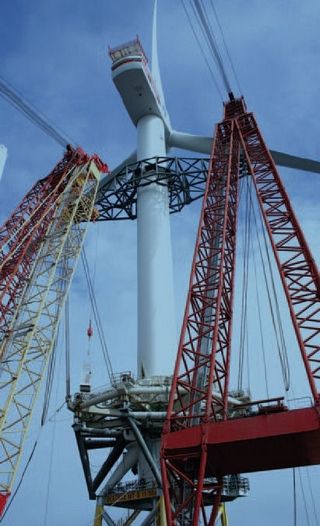
This Tuesday, March 5 at 1pm the New Hampshire House Science, Technology and Energy Committee will vote on two important bills effecting New Hampshire environmental and energy future: HB 580and HB 484wind turbine under construction

Both of these bills relate to the expansion of wind turbines in the western and northern regions of the state. Both of these bills currently rest in committee.  A large portion of representatives considered “retaining” the bills which essentially means they sit without action for an indefinite period — while energy industries continue unabated with their development within currently outdated and insufficient guidelines and rules.

We urge people to call the committee members and their house representatives to tell them to pass these two bills and get them out of committee and onto the house floor for a full vote.  Click on the link below for a full listing of committee members with links to their email address and telephone numbers.  Most NH Reps are very responsive to citizen inquiries and will answer phones and emails promptly and always will read them.

House Science, Technology and Energy Committee

Senators in support of or acting sponsors of the HB 580:

Sen. Jeannie Forrester – sponsor

– Sen. Jeff Woodburn – supporter

HOUSE BILL 580 proposes a moratorium on any further construction of wind turbines or transmission lines.  Linked above, the bill text is short and to the point.

A moratorium on any further construction or approval of transmission lines (as originally intended by the bill’s authors) and wind turbine development will allow communities and all stakeholders a chance to develop stricter and more appropriate guidelines for renewable energy development.  Industry has threatened that the renewable energy time table will be lost causing the RSP to spin out, they have threatened that they will leave the area, never to come back again if they don’t get what they want now.  They also threaten that federal tax credits will soon expire, presumably never to be resurrected again.  None of these claims have any basis in reality.

Ironically committee members expressed their desire for more information on the issue, many of them stating that they just didn’t have all the facts. Without the moratorium, the SEC will continue its approval process unabated and the people will not have the information and the facts so desperately needed on this issue.

The wind turbine industry has threatened that waiting will cause them to look elsewhere; that a wait signals ‘bad to do business in New Hampshire’.  Seems rather disingenuous when at the same time industry lobbyists say that they have the communities’ concerns at heart, that they are confident of the quality and sustainability of their product and that they will work with communities.

HOUSE BILL 484 sets parameters for the SEC to consider aesthetic issues relating to the placement of structures, particularly their visibility “without amplification by the human eye”.  Most importantly HB 484 will add to the existing SEC rules of RSA 162-H the following regarding public input:

6 New Section; Public Approval. Amend RSA 162-H by inserting after section 10 the following new section:

162-H:10-a Public Approval.

I. The site evaluation committee shall determine whether any part of any structure of any proposed project is visible without amplification to the human eye from public property in a particular city or town. Its determination shall be based on information provided in the application and any change in or amendment thereto, any petition filed under RSA 162-H:7, VII, at any public hearing, and in any other balanced way deemed appropriate by the committee.

II. For each city and town in which the committee finds in the affirmative and for which a petition under RSA 162-H:10, VII was submitted, a vote shall be taken in such city or town at the next regular meeting of its legislative body. The question before the voters shall be as follows: “Are you in favor of the state approving the energy facility project proposed by ________________ for the city/town of _____________, specifically a [insert “power plant,” “windmill farm,” etc.] off _______________ road?”

III. The town or city clerk shall certify to the site evaluation committee the result of the vote in his or her community, and the committee shall total the votes for all participating communities taken together.

IV. No proposed project shall be granted a certificate where the total of the negative votes of all participating cities and towns taken together exceeds the total of the positive votes; provided, however, that such a certificate may be granted if subject to the condition that no part of any structure of the proposed facility is visible without amplification to the human eye at any time or season from any public property.”

LET THE SEC DO ITS WORK:

When this writer talked to some members of the committee, the trust in the SEC and its process was remarkable.  But assumptions can be dangerous.  Currently the rules that govern the SEC (Site Evaluation Committee) fall under RSA 162-F and RSA 162-H and deal mostly with traditional power generation plants such as gas, coal and nuclear.   Unfortunately although the wind industry has developed on some small scale within New Hampshire there exists no firm guidelines for the SEC to follow regarding the development of wind energy in the state.  In 2007 a group of industry experts and other stakeholders put together a proposal of guidelines for wind, but the SEC has failed to adopt the proposed guidelines.

An amendment was proposed by Bob Backus (d) and Susan Arnold of the Society for the Protection of New Hampshire Forests (SPNHF) that would demand that the the committee recommend that these guidelines be updated and adopted by the SEC.  But this amendment was proposed as a compromise to the resistance of some members of the committee to move on a moratorium.  While the updating and adoption of the 2007 rules is needed, many see this as still allowing a loop hole through which current applicants can jump through.  The amendment fails to mandate that all applications stop until further research and updating is complete.

At the working session last Tuesday an industry rep for PSNH spoke of her familiarity with the working group that drew up the 2007 guidelines, noting “I was around then.”  She noted that the process took at least a year.  Can we or should we depend on the industry to be willing to wait a year or more for the new guidelines to come online? Can we have faith that they will not pressure the SEC to continue their current permitting process and allow development unabated?

One has to wonder if the SEC is willing or ready to deal with the complex issues of wind energy if they have not bothered to adopt or even request an update of the proposed guidelines of 2007.   Most markedly, if one bothers to scan the guidelines, it is clear that the working group admits that they have only a small amount of data to go on and that further study on the issue of wind energy generation is urgently needed and that was in 2007!

THE SEC PROCESS:

Many of the representatives in the committee pointed to the “Antrim Decision” as proof that the SEC does in fact do their job in hearing out a communities concerns and will rule accordingly.   Unfortunately, as was pointed out in testimony at the February 19th hearing in Representative’s Hall by an Antrim resident and activist, it took four long hard years for the community to come together — all volunteer — to combat the paid wind industry lobbyists.   It is worth noting as well that Antrim was the only town that was able to stop a wind project from gaining SEC approval even though numerous projects have gone online over the years, not all with shining success.   Groton Wind Farm, LLC (Iberdrola satellite) already has caused problems that are currently pending before the SEC.  Although the issues, placement of buildings and poor road maintenance are disturbing in and of themselves, most troubling is Iberdrola (in this instance Groton Wind Farm, LLC) seems to demonstrate poor management if not outright dishonesty in its practices.

The rules governing the SEC process, 100-300 spell out in detail the process by which hearings are held.  It is clear from reading the guidelines that general court procedure is followed with rules of discovery, cross examination and petition by the public or “interveners” that may be cumbersome and difficult to navigate for those not legally trained.  HB 484 gives more direct empowerment to communities at least on the issue of site placement a more direct and democratic process.

TRULY GREEN OR JUST ‘GREEN WASHING’?

You know, the “green” packaging at stores, touting that a product has a better carbon footprint of some competitor, that a product’s production used less energy or that a small portion of the product’s content is made up of recycled material?  Ever cynically wonder if all that is really true or just a lot of fluff? Ever stop to consider that possibly there’s a certain irony to a company making a profit off of increased consumption while calling itself ‘green’?

In our haste to reduce greenhouse gas emissions we must examine all options carefully and intelligently.  Enough data exists from wind turbine energy production around the globe to draw serious questions that must be answered.  The core cause of our current environmental crisis has more to do with past ignorance of the grave costs of energy generation to our environment and health.  It seems that now in the 21st century we should have the wisdom to know that the first order of business is to all options consider carefully. While wind energy may not, in the simple view produce CO2, many portions of its construction do:

– wind turbine sites require extensive deforestation for access roads and maintenance buildingsas one person notes on windeffects.org, deforestation removes vital natural environmental scrubbers for CO2 gas.

– the irregularity of energy generation by wind requires backup from traditional fossil fuel resources in order to balance out its lackluster and irregular contribution to the power grid.

– wind power can only provide an efficiency of around 10-17%, figures of 30% efficiency touted by the industry constitute only the highest efficiency in the best conditions, such is never consistently provided by wind.  In fact the only locations in New Hampshire where turbines might have a “good” to “moderate” rating are on the tops of currently valued and protected mountaintop ridgelines.

– wind turbines as proposed for New Hampshire and elsewhere are expected to tower at 454′, requiring footings as large as 20′ square, some estimates are as high as 60′ x 20′ deep.  The excavation required for any footing is always far larger than the footing itself, so consider this estimate conservative for the destruction of landscape.  This is particularly important when considering the ‘bony’, that is rocky terrain of New Hampshire.

– currently EPD Energy has plans to move forward on a project that will directly impact the Mount Cardigan State Park and the surrounding towns.  Mount Cardigan is a popular tourist destination and part of the Appalachian Mountain Club’s system of with a lodge that hosts nearly 8,000 overnight guests a year and maintains a network of trails throughout the western region.  It is estimated that the Mount Cardigan trails serve over 15,000 hikers a year in all seasons.  EPD energy’s proposed wind installations will sit directly on current trails impacting this vital gem of New Hampshire’s western region.

– the owner of the Rumney Village Store recently told this writer that his business jumps up 600% in the spring and summer months as tourists come to enjoy Newfound Lake, Rock Rumney and the surrounding mountains and hills in the area.  They don’t come to walk wide deforested access roads to wind turbines.  While a few turbines may not be intrusive, an industrial wind “farm” of nearly 500′ turbines planted close together along ridgelines with access roads to each carved out of the forest is quite another matter.

Newfound Lake, a popular destination spot nestled in the western mountains of the state. Prime real estate, natural recreational areas and resources are threatened by wind farms proposed for the area.

Finally, the elephant in the room when discussing energy use and generation is conservation.  The acceptance of the paradigm of expanded consumption to drive economic expansion and profit must be challenged at its root.  While the reduction of greenhouse gasses in the production of energy must continue, this cannot carry on in a vacuum.  The time when energy was seen as cheap and easy has come and gone; manifest destiny has played out.  We’ve drilled, blasted, dug, carved, scraped and soiled our planet to the point where we lay on the precipice of near destruction.

In addition, in the vein of continued consumption and individualized technology we’ve become more disparate and more disconnected from our communities and ourselves.   Our national government has become enmeshed with global corporate power on a level never before seen.  Disconnected from local communities and their needs, giant corporations intrude on communities to exploit the local citizenry and extract their resources, whether natural or human, for their own profit, returning little if any benefit back.  Sustainability for the future must consider the long term health and growth of a community — for its own sake, not for the profit of a few large companies that will inevitably leave the unprofitable mess for the community to deal with.

For further information see links below:

windeffects.org

NH Windwatch.org

Wind: The Whole Truth

Wind Turbines Show How Costly Free Can Be : Minnesota Public Radio

Wind Power’s Dirty Secret: Its Carbon Footprint: KATU.com, Portland Oregon

Tagged , , , , , , , , , , , ,

Why We Need a 28th Amendment

by Sam Sholi

With Congress’ approval rating at a resoundingly low 9% amongst American citizens according to a survey by Public Policy Polling, it can be assumed that the American people have finally become conscious of the fact that the U.S’ political system, or at least those within it, no longer work in their interests.

Now that Congress is less popular than traffic jams, head lice, cockroaches and colonoscopies (according to the same survey), one can’t help but wonder what has driven Congress to appear so incompetent and to be subject to such an intense level of dissatisfaction amongst U.S citizens.

The answer is clear – the major influence of corporations, lobbyists, and wealthy campaign donors has resulted in ensuring that a vast number of American politicians are now nothing more than mouthpieces for the highest earners and biggest businesses in America. This problem is compounded by the U.S Supreme Court decision in the case of Citizens United V Federal Electoral Commission in 2010, where it ruled corporations have the same First Amendment rights as people and therefore can make unlimited campaign contributions during election campaigns.

The Center for Responsive Politics (a nonpartisan, independent and nonprofit research organization dedicated to tracking money in U.S politics and its effect on elections and public policy), cited that statistically, even in the most competitive cycles during congressional elections, on average the candidates who spend the most on their campaigns usually win eight of 10 Senate contests and nine of 10 House races. The evidence conclusively proves that the defining factor in deciding who sits in Congress no longer bears any relation to your ideology, whether you are a Republican or a Democrat, or whether you are a liberal or conservative. It’s all about the money!

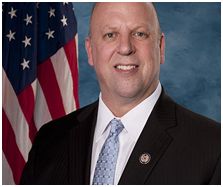
desjarnis rep pic

Rep. Desjarlis (R) Tennessee – a product of the system’s flaws

The effect of this has been disastrous. The fact that these politicians are predominantly elected because they can afford to run superior election campaigns means that sometimes American congressmen and senators will be elected despite being simply unfit to do their job. The most notable example of this being how last year Congressman Scott Desjarlais (TN, 4th District) was re-elected – a  Republican who was disgraced during last year’s congressional elections for having multiple mistresses and requesting one of them to have an abortion, despite running his campaign on being a pro-life, pro-family values candidate. Of course, Dejarlais spent more money than his rival for his seat.

The second problem that arises under this current system is the fact that several U.S politicians are no longer acting based on their own instincts, but for their donors. Is it really a coincidence that Gun rights groups have given more than $17 million in individual, PAC and soft money contributions to federal candidates and party committees since 1989, yet we still have failed to see any serious gun-control measures despite public outcry for it after every mass shooting in the last 25 years?

The only way to avoid this problem will be to introduce a 28th Constitutional amendment that not only overrules the decision in Citizens United, but also prevents an elite class of donors being able to exercise their current entitlement to effectively buy the country’s elections through excessively high campaign donations.  In order to achieve this, the amendment must contain a provision to make it illegal for corporations to directly or indirectly give money to any politician, and a provision which places a cap on the amount politicians can raise from any individual.

But if so many congressmen and senators are under the influence of corporate interests and wealthy donors, then why would they accept such an amendment? The answer is that they don’t have to. It is possible to bypass Congress. If two-thirds of the State legislatures (whose members are not as heavily influenced by money) call for a Constitutional Convention then it will become possible to pass the amendment.

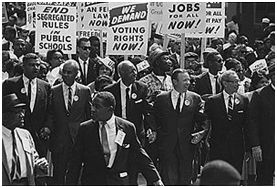
civil rights marchers

The 1960’s civil rights movement – proving that unjust establishment practices can be brought to an end if the political will is there.

This presents a real opportunity for America to take back its democracy. But as was the case with the success of the 1960s civil rights movement amongst African-Americans, if this amendment is to be passed then there will need to be a movement with leaders (like Martin Luther King Jr. and Malcolm X) that can inspire a mass movement of people to stand up for that change.

But in order for that to happen, America must first undergo a revolution of consciousness and wake up to the fact that a vote at the ballot cannot compensate for the erosion of a democracy.

Sam Sholi is currently studying law in a university in the United States

Tagged , , , ,

“Say No to Wind Turbines” — and Yes to Global Warming I suppose?

Although this as published in June, it still is prescient.  Currently there exists a small contingency of folks in the Western part of New Hampshire protesting wind farm proposals.  Already some windmills can be seen from far and wide in that area, perched as they are on the tops of mountains in the area, such as ones on Tenney Mountain.But, as unsavory and violating that the wind-farms may be on the mountain tops, the protests must provide alternative areas/locations for the development of alternative and renewable energy.  Otherwise, the campaign simply amounts to a gimme for the oil, gas, hydro and nuclear industries that wish to stall any development or support for any renewable energy projects.

In that vein and while doing research on this topic, we stumbled across this very cogently written opinion by Bradley Dibble, MD from his blog Comprehending the Climate Crisis.

Enjoy.

Posted on June 18, 2012

If I were to propose a new product for the marketplace to be used for human consumption, it would need to be rigourously assessed to confirm its safety first. If I described my new product as having the following properties, what do you think would be its chances of getting approved?

—it’s addictive, not just habit-forming
—it’s known to cause or aggravate the following health conditions: heart disease, oral cancer, lung cancer, esophageal cancer, bladder cancer, emphysema, chronic bronchitis, asthma, and low birth weights in children
—all of these occur when the product is used exactly as intended, not just when abused in excess. In addition, non-users who are exposed to it secondarily are also at increased risk for these same diseases

It’s no secret I’m describing cigarettes. Simply put, cigarettes have no redeeming features. My patients who smoke describe that it relaxes them, but that’s misleading. What they’re truly experiencing is going through nicotine withdrawal when they feel that relaxing effect, essentially getting their next “fix.” Nicotine is a stimulant, not a sedative. Anyone who’s addicted to a substance suffers when they go without it too long.

It’s fair to say that if cigarettes were introduced today, they’d never stand a chance of being approved for public use. But since they’ve been around for centuries, we’re stuck with them for now. There’s a certain degree of regulation (e.g. kids aren’t supposed to smoke them), but despite the jobs associated with the tobacco industry and the taxes generated from the sale of cigarettes, none of that will ever compensate for the costs to society in health care alone with so much death and disease that they cause. New products introduced into society are forced to prove their safety before they’re approved, even though other products out there are clearly unhealthy for us.

We face something similar with wind turbines. This weekend my family and I drove to Priceville, Ontario to get our new puppy. (You don’t know where Priceville is, you say? Well, it’s just on the other side of Flesherton!) On the way driving through Grey County, I was amazed at the number of signs protesting wind turbines. Most farms we drove by had signs on their properties urging people to “Say No to Wind Turbines.” They often had other comments too like “Foul Wind” and “Say Yes to Turbines, Say No to Visitors.” They all listed a website at the bottom of the signs for Wind Concerns Ontario.

I checked out the website when I got home. It’s amazing to see how many references they have listing how bad wind turbines are for society. I wanted to check some of the information out and given that I have some expertise in health care as a physician, I clicked on the health tab on the website’s home page to see what was listed there.

There were a number of categories for health concerns listed including noise, mental health, stress, and sleep disturbance. I checked out the first six links I could click on that were meant to elaborate on these topics and was surprised to see that none of them worked. They all had “Error 404 – page not found” errors. The next two links worked but both went to the same slide show and without the words of the speaker to go along with the slides, it didn’t provide much useful information.

The next ten references were to articles in a peer-reviewed journal, the Bulletin of Science, Technology & Society (August 2011 31 issue). In fact, every one of them referenced this particular issue. As someone well-versed in science, I can tell you that having some variety in scientific references is a much more robust way to support an argument rather than having everything coming from one particular issue of one particular publication. But I guess they have to get their sources where they can and this particular journal does it for them. (According to the webpage, it seems the current issue is from December 2011. I don’t know if that means they’re on hiatus or only publish intermittently. I’d never heard of this journal before so I’m not sure.)

There may well be some health concerns with wind turbines, and I appreciate that further study will be helpful to elaborate those further. But can they really argue that the health concerns from using fossil fuels aren’t a problem? (Later this week I’ll have a blog post dedicated to this very topic, so stay tuned.)

Even if we ignored global warming and the future climate crisis we’re destined to experience if we continue with business-as-usual, do they not realize that smog, pollution, acid rain, and ozone depletion create havoc with our environment and our health? Many of the diseases caused or aggravated by these problems are cardiovascular so as a cardiologist, perhaps I’m more sensitive to the issue than other physicians might be.

The health concerns about wind turbines are on par with the health concerns about any new product being introduced into the market today. They’re like a new pharmaceutical agent that could prevent heart attacks and strokes. But if that new agent leads to an increase in liver cancer, for example—even a small one—it might not make it to market. It’s often a forest-for-the-trees situation.

I started out this post by describing how cigarettes would never be approved for use if introduced into society today, but because they’ve been around for centuries, they’ve gotten away with it. Fossil fuels are like cigarettes in our society. Long-entrenched, they’ve been in use for hundreds of years. So despite the known health concerns with fossil fuels, they’re too much a part of our civilization to do away with very easily.

I guarantee you if both wind energy and fossil fuels were being introduced today, wind energy would win out over fossil fuels. Fossil fuels have the advantage of having been introduced long before regulations would ever explore their risks, or anyone ever expressed safety concerns associated with them. And now it’s too late to do so, and yet safer options like wind turbines will have a lot of people protesting against them.

These protestors simply can’t see the forest for the trees. It’s a fact those who argue against wind energy conveniently forget.

Tagged , ,