A K-Mart store owner in Plymouth, NH defies the corporate mandate from K-Mart by closing the doors of her store for Thanksgiving. K-Mart, Sears, Wal-Mart and other giant retailers intend to ignore the national holiday and schedule their employees to report to work. As everyone knows, retail workers’ pay falls substantially below the living wage mark. In addition, retailers like to keep their workers part-time or near close to it, causing most to take whatever hours they can to get their take-home wage as high as possible.
In addition, most low wage work requires short training periods and the unemployment rate in the country still remains high. Perfect conditions to remind workers that complaints about work schedules or hours will garner little sympathy and could cause one to be out the door. So much for that old saw about the open market place of the job and worker choice.
The whoring of the holiday is evident with a google search “stores open on Thanksgiving” bringing up headliners such as:
Reuters: “Eyeing holiday sales, more US retailers to open on Thanksgiving...Meanwhile, many Wal-Mart Stores Inc U.S. locations will be open all day…”
Latino Fox News: “Can’t Wait For Black Friday? More Stores Than Ever Now Open On.While stores like Walmart have been open on Thanksgiving for the past 25 years, others like Macy’s are opening for the first time on Turkey Day …
Retailindustry.about.com: “Complete List of Retail Stores Open Thanksgiving Day – Pre-Black Best U.S. Retail Promotions Thanksgiving Day is the new Black Friday, with some of the largest U.S. retail chains opening their retail doors and starting their Black Friday sales promotions …”
Isn’t that wonderful? Thanksgiving Day is the new Black Friday! Your corporate masters shall decide when you will rest and when you won’t! Get up slaves and work!
We at Progressive Action NH urge everyone to stay home, relax and spend the day with friends and family. Happy Thanksgiving.
PLYMOUTH, N.H. (AP) — Many stores are planning to be open on Thanksgiving, but the owner of a Sears store in New Hampshire says her store is staying closed.
Franchise owner Holly Cassiano in Plymouth tells WMUR-TV (http://bit.ly/1ghrTuG) said she had one reaction when the Sears corporate office told her she had to be open on Thursday: anger.
She said she’s not going to let corporate retailers rule over family values on the holiday. She sent a letter to Sears with her reasons for staying closed, but hasn’t heard back yet.
‘‘I value my employees enough that I wouldn’t have them have to work on a day that’s mean to be spent with family,’’ she said. She’s also starting a petition calling on state legislators to pass a law allowing for franchise owners the flexibility to close on holidays.
She plans to open at 6 a.m. on Black Friday.
A Granite State Poll shows that a majority of New Hampshire residents don’t like the idea of stores opening on Thanksgiving. The poll conducted by the University of New Hampshire Survey Center shows just 9 percent approved of stores opening on the holiday, while 54 percent disapproved.
Well its been a bit since anyone has posted here now hasn’t it? Judging from our stat ticker, unbelievably enough people have been checking in with us and we appreciate your faith in our possible resurrection. We intend to post at least twice a week, maybe more often. Coming up on a new legislative session in New Hampshire, the end of the government-has-hostage debacle (for now) and the continuing rage of Tea Baggers nationally and Free Staters locally will gives us plenty to stay up at night and worry over.
So without further ado, we’ll let Susan the Bruce weigh in on the latest happenings from the shut-down to the impending antics of our many ALEC tools in the state house:
Government by the Petulant
The government shutdown has ended and the possible default has been averted. For now. We’ll be going through democracy-by-hostage-taking again in just a few months. The Republicans have ample time to figure out their next round of demands. (Make me a sammich or we’ll shut down the gummint!) The Tea Partiers were ready to play Russian roulette with the global economy just because they hate Obama. The next time the US tries to impose democracy on some other country, the rest of the world is going to laugh in our collective faces. And they should.
This shutdown was brought to us by the party of fiscal and personal responsibility. That’s $24 billion of our tax dollars wasted by a bunch of 3rd grade playground bullies stomping their expensively shod feet about a law they don’t like. These are not statesmen, doing the work of the people. These are petulant and vindictive men who were willing to make the whole world pay because they didn’t get their way. This is why any person running for any office (local, state, national) who says they hate gummint should be immediately and permanently disqualified.
Will the party of fiscal and personal responsibility be taking up a collection to reimburse the taxpayers for the $24 billion? Don’t hold your breath. The poor lambs planned the shutdown for months, and then got miffed when a shutdown meant actually shutting things down. One take away from all this? We should really stop waiting for Texas to secede and take preemptive action. If they want to elect dunderheads like Ted Cruz, Randy Neugebauer, and Louis Gohmert to state government that would be one thing, but sending them to DC where they can mess with all of us? Sorry, Texas. This just can’t be allowed to go on.
As for GOP fiscal responsibility, we’re seeing it right here at home. The 2014 legislative session will begin in January, where they will have 638 bills to contend with. So far. The Senate cut off for filing LSRs is October 30, so we can count on a last minute flurry of filings. The average cost of an LSR (legislative request/potential bill) is $1500. Representative JR Hoell, of Dunbarton, is this year’s winner in the most bills filed category, at 21. That’s 21 bills, at a cost of $1500 each – Representative Hoell is going to cost NH taxpayers $31,500. Given that he’s a remarkably ineffectual legislator, we can be sure that few if any of these 21 bills will be passed. In 2013 Hoell sponsored 12 bills. None of them passed.
Hoell is not a member of the Free State Project, but he’s the next best thing. He’s part of the extremist libertarian crowd. They worship at the altar of Koch, Rand, and Paul (pere et fils.) They hate gummint, so they work tirelessly to become part of it. To show their contempt, they file endless nuisance legislation, to waste the time of their colleagues, and taxpayer dollars. They claim to hate wasteful spending, but they do it themselves at every opportunity. They also claim to hate the nanny state, but they are desperate to play stern patriarch to the uterus bearing population of NH. A sardonic tweet the other day (from an observer of the nanny state uterus brigade) read: “It’s not uterYOU, it’s uterUS.” To summarize Hoell’s bills, he wants everyone, everywhere to have unrestricted access to guns, wants to eliminate the judiciary and the police, and he wants women to serve as involuntary incubators. He might want to rethink giving the involuntary incubators unrestricted access to guns.
Coming in at 19 LSRs is Rep. Dan Itse, from Freemont. That’s $28,500 worth of taxpayer waste. Itse is another extreme libertarian, not a Free Stater, but certainly an ally. Many of Itse’s bills are aimed at ensuring that food produced in NH is exempted from the Food Safety and Modernization Act. These folks hate gummint regulation, and feel that in the free market, you should be able to choose for yourself what you buy. If you want to buy contaminated food, that should be your decision. If you buy it unknowingly and get sick or die, well, next time you won’t buy from that guy!
Itse also wants to recodify education laws, laws relative to law enforcement personnel, and wants to eliminate proprietorships from the business enterprise tax. He also wants to prevent students from voting. The extreme libertea crowd hates law enforcement and hates the judiciary. They sympathize with the crowd of whiny wife beaters who feel hard done by that they have to pay child support, but they don’t get full custody. Still, this year Itse made an effort to reel himself in. Last year he sponsored 42 LSRs, at an estimated cost of $63,000. Not a single one of them passed. I’m sure we’re all happy to know that fiscal conservatives like Itse and Hoell are looking out for us.
There are at least a dozen gun bills proposed, because, after all, in a state with 500 bridges that are on a red list for structural impairment, the only possible solution is guns and more guns. The unemployment rate is at a firm 5%, and obviously the best way to deal with that is GUNS!
The northern Carroll County delegation has managed to comport itself with admirable restraint. No one has filed an epic number of bills, no gun bills, or anything that (so far) seems like nuisance legislation. A pity that can’t be said of the legislators from the southern part of the state. We sell the good people of Massachusetts cheap booze and cigarettes, mock them for being socialists, and they thank us by sending their misanthropes to populate southern NH where they run for the legislature. Massachusetts gets the last laugh.
“This is your democracy, America. Cherish it.” Charlie Pierce
Can’t get enough of Susan the Bruce? Visit her website at: SusantheBruce
From a blog on Cape Cod Today by writer Joe Quigley, his observations on the recent Arkansas tar sands spill which Exxon oil has managed to dodge clean-up costs for. Also, as he says, let’s not forget the 2010 tar sands oil spill from a pipeline that crossed the community of Kalamazoo. Joe’s article is chock-full of information on tar sands and the already present national struggle to deal with its effects on our environment and our lives.
While much emphasis has been placed on the XL Pipeline in Texas, the same nightmare is looming for construction hear in the Northeast with the Trailbreaker Pipeline. We provide links for more information after the fold to the article. Also, there will be an event here in New Hampshire on Saturday, April 20th, put on by our good friends in the North Country of New Hampshire.
What’s a Little Oil?
I am sure most of us are familiar with that man named Jed. He was that poor mountaineer who barely kept his family fed. Then one day he was shooting at some food, and up from the ground came the bubbling crude. Oil that is, black gold, Texas tea. We are also aware that since he owned the land where he found the oil, he was able to walk away and move to a fancy neighborhood.
Last Friday in Arkansas, Jed’s home state, up from the ground came the bubbling crude, but since the people do not own the pipeline from which it flowed, they do not have Jed’s option to just up and move.
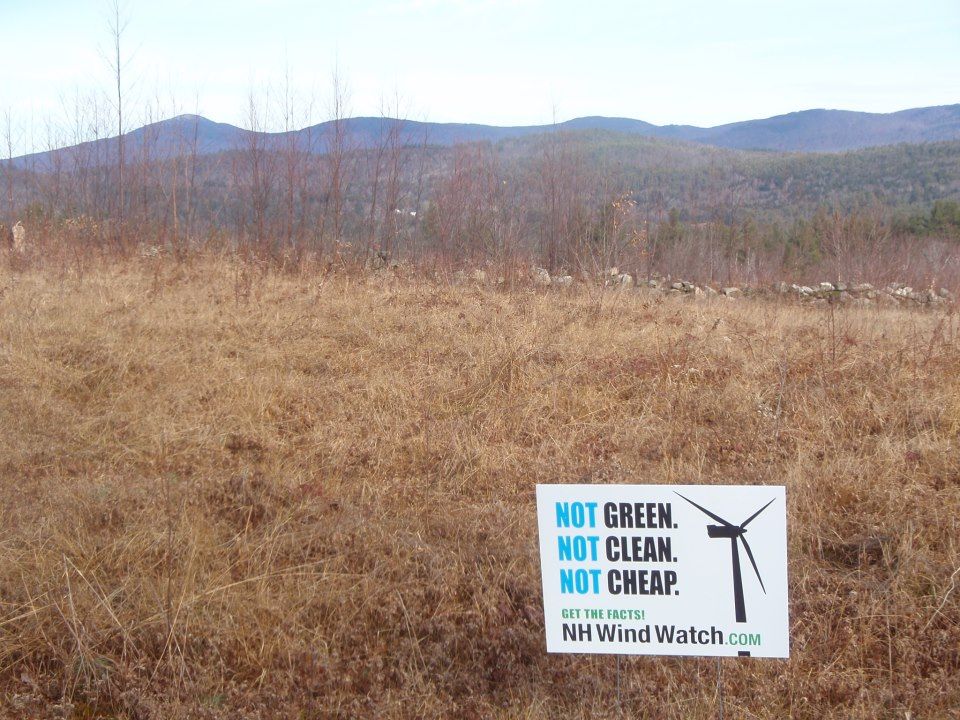
An editorial from April 1st, in the Wall Street Journal written by functionary in the wind industry speaks his mind about the flood of federal subsidies for wind turbine development. Its worth a read and prescient to the experience across the country of people finding the development of wind power taking a turn down the old slippery slope of greed. The wind industry has woven itself into the hearts and minds of most Americans who remain unaware of the environmental hazards that the current designs of wind turbines present. In addition, as the writer, Patrick Jenevein says in his own words, the industry has, in their hunger for profit, forgotten their original mission which was in fact to assist in preserving our planet from further industrial destruction.
Wind Power Subisidies – No Thanks!
by Patrick Jenevein for the Wall Street Journal
The sequester has led to dire warnings from many camps, including advocates of clean energy, who argue that Washington’s modest cuts could derail America’s green future. But from my vantage as a CEO in the wind-power business, the sequester offers Washington a rare opportunity to roll back misguided subsidies and maybe help reverse wind power’s stalling momentum.
Since 2009, as part of the president’s stimulus, wind-farm developers have been able to get a federal cash grant or tax credit covering up to 30% of their capital investment in a new project. This is especially attractive compared with another tax credit that rewards wind farms based on how much power they actually produce. Through May 2012, according to the National Renewable Energy Laboratory, Washington spent some $8.4 billion on these cash grants.
But under the sequester, Uncle Sam is cutting the cash-grant program by 8.7% between March 1 and Sept. 30. Advocates of clean energy should welcome this haircut and urge for even more fundamental policy change.
Barbara Kelley
Government subsidies to new wind farms have only made the industry less focused on reducing costs. In turn, the industry produces a product that isn’t as efficient or cheap as it might be if we focused less on working the political system and more on research and development. After the 2009 subsidy became available, wind farms were increasingly built in less-windy locations, according to the Department of Energy’s “2011 Wind Technologies Market Report.” The average wind-power project built in 2011 was located in an area with wind conditions 16% worse than those of the average project in 1998-99.
Residents of New Hampshire have yet another chance to save the mountaintops of the western highlands region of the state from destruction. On Wednesday the full New Hampshire house will hold hearings and then vote on SB-99 in its amended form and a new amendment to HB-2.
SB-99, once the moratorium bill has emerged from the Senate Energy Committee transformed into an entirely different bill. In an apparent compromise, Senator Bradley’s proposal to exclude transmission lines in the moratorium did not survive. Although transmission lines (pertaining of course to the Northern Pass project) did get back into the moratorium bill, this only occurred with the exclusion of the moratorium demand entirely. In its place the Senate inserted language to create a committee be formed from members of the house and the senate.
Representative Neal Kurk, of Weare has proposed an amendment to HB-2 which will put in place a moratorium and will read: (this is the proposed draft):
““Notwithstanding any provision of law to the contrary, there are here by established moratoriums on the constructions of wind turbine plants and electric transmission line projects in the state of New Hampshire until July 1, 2014. The site evaluation committee, established in RSA 162-H:3, shall issue no certificates for wind turbine plants or electric transmission line projects under RSA 162-H while such moratoriums are in effect.”
Everyone needs to call or email their representative TODAY or TONIGHT to let them know that wind turbines will have a serious, irreversible effect on our environment, our natural landscape and resultingly our economy statewide. This is not a regional issue but a serious statewide issue. A moratorium will temporarily halt approval of turbine development until further study and due process on research can commence without pressure or undo influence from the wind industry. Click on the link below for an easy to use search tool to find your representative and their contact information. The representatives have heard the opinion and propaganda of the paid lobbyists for the wind industry, have they heard from you?
This committee already has come together and recommended right out the gate that the Site Evaluation Committee adopt the Proposed Wind Siting Guidelines (.pdf) that a consortium of industry and state agency persons created in 2007. Of course, demonstrating its hesitance to take an objective stand on wind energy, the SEC decided immediately to not adopt the siting guidelines. This despite a March 3, 2013 petition directly from the house Science, Energy and Technology Committee, requesting that the SEC adopt the 2007 proposed guidelines.
Currently there exists no guidelines for siting wind turbines, no consideration for environmental impacts and a very poor, non-democratic methodology for public input and even announcement and planning of public hearings. As per testimony from March 29, 2013 of Lisa Linowes, intervener on many turbine hearings:
“No definitions are provided in either the Statute or the Committee’s rules which explain specific studies to be conducted by the Applicant in order to demonstrate, for example, the impact of the proposed facility on the environment. And no requirements address standards for conducting appropriate post-construction surveys. Since siting of wind power facilities presents challenges that are different from those faced by other types of energy facilities, there are well established protocols for conducting studies that aim to predict and address the impacts. Siting guidelines would help the SEC, State Agencies, and Applicants in deciding what studies should be conducted and the protocols to be followed PRIOR to an application being submitted. In some cases the SEC has required that additional studies be conducted after a project is permitted. This process is inherently unfair to the public and unduly discriminates against the public’s involvement.”
Currently the SEC has complete control over who testifies and acts as an “intervener” on behalf of the public by function of their intervener approval process. In addition, public hearing notices receive publication in the rarely read legal notices section of newspapers in the hosting area region. In Berlin for example, it appears through reading the notes of the one hearing, that the presence of the Berlin city planner was considered sufficient public presence. Thus the committee was able to rationalize the public’s approval and move forward with industry testimony and nothing from concerned citizens.
The most unfortunate development so far has been the refusal of Democrats, usually the defenders of environmental justice, to consider the ill effects of the wind turbines. Representing predominantly urban areas not directly affected by the wind turbines, these representatives and senators have the temerity to call those against wind energy as NIMBY’s. Interestingly, not one of these individuals who represent Manchester, Nashua, Portsmouth, Dover and surrounding areas will have to suffer from the ill effects of wind turbines. In fact, it might be safe to make the conjecture that as long as the turbines remain on the mountains, then at least the seacoast won’t have to worry about the potential of wind turbines placed on their treasured seacoast.
The same holds true for those in the White Mountain region who will suffer from the effects of the 400′ towers proposed as part of the Northern Pass project. Northern Pass, a project that Hydro-Quebec and PSNH will make millions on, will as proposed, carry electric power generated by hydro dams in southern Quebec. Already the Innuit people have seen portions of the native lands flooded by the country of Quebec with no consideration of their needs. In addition, it has been estimated that a lake the size of New Hampshire itself would be required to fulfill the demand from southern New England that these power lines will deliver.
These New Hampshire legislators have not only a duty to the residents in their districts, but also a duty of concern for the health of the entire state. The wind industry, acting much like most all large industries, wishes to keep their projects as locally confined as possible, thus keeping the outrage over their risks and hazards confined as well. The democratic process of review cannot function when the people in the entire state do not have the information needed to make proper critical analysis. Legislators represent; they do not dictate, nor do bureaucrats or others of select group.
Both Northern Pass and the development of wind turbine “farms” (a misnomer as nothing is farmed) substantially threaten New Hampshire in many ways. Its indeed ironic that traditional progressives have such a hard time swallowing the cruel fact that green technology is neither simple, nor easily applied to existing paradigms of energy production carved out over a century ago. We must take the time to properly analyze, evaluate and understand our need for clean energy, our consumption habits, our production capabilities and most importantly, the long range effect all will have on our communities and environments.
From The Ecologist.org, a very good article by ecologist writer Luke Dale-Harris on the EU’s Natura 2000 goals and the brewing conflict between conservation ideology and renewable energy development – once thought to be allies in the struggle to save the planet. A very prescient analysis that applies to the US and its struggles with the same conflicts. Can we make the claim that renewable energy encompasses modern values of conservation? Wind developers have used the claim of meeting the balance of providing for modern energy needs while also meeting the need to conserve the environment. As time goes on and growing experience begins to tell us wind and hydro developers have under scrutiny shown their own conflicts with preserving biodiversity in our environment.
Also most troubling as this article points out through experience provided in Eastern European countries (many of which have only recently been freed from the yoke of dictatorial control), that these new “renewable” energy industries use the same imperialist, non-democratic and hierarchical strategies of their more destructive predecessors. The exercise of sustainable practice must include involvement of all parties that make the earth their habitat, from humans to the natural environment that humans depend on.
The Hidden Conservation Costs of Renewable Energy
The birds that migrate freely across Europe are unaware of the invisible borders that lie below them. They follow the same routes that have carried them to warmth every year for an eternity, marked out by the indomitable features of the landscape – the coast of the Atlantic on one side and the curve of the Carpathian Mountains on the other. But it is what they miss that matters most; their future, along with that of the rest of us, is dictated by the political and economic tides that shift shape across the continent.
In this day, with growth and progress honoured above all else, the natural world is at the mercy of human endeavour. Allowed to run its course, the open market will drain the land of all life over and above what is fundamental for its own survival. The more fragile and economically superfluous species of the world – the lynxes and lesser spotted eagles, right down to the field cricket or river jelly lichen – remain only for as long as we consider their existence a moral imperative, and their extinction as a cause for shame. It is this that drives conservation.
Offered in support of Senate Bill 99 (in its original form) on Wednesday, March 20th, in front of the Senate Energy Committee, were testimonies of various persons who will be affected most specifically by the proposed wind turbines and the Northern Pass power line project.
While Northern Pass has received a lot of press and a lot of support from the general public due to the length of time its been before the public and the amount of organizing against, the issue of wind turbines proposed for the western highlands of the state has not received much attention.
The full senate will be voting on SB 99 tomorrow (Thursday, March 28th), please call your senator and let them know we need to halt the industrial onslaught now!
We decided to place here for your perusal, some of the testimony from that day from people. Those who will be directly affected or who have expert knowledge of how the trails and mountains will be affected by the proposed wind turbines testified that day. The folks at NH Wind Watch were kind enough to send us these transcripts and also some video that was shot of the hearing, which show most of the testimony, starting with Jeannie Forrester, the bill’s sponsor.
Also in the video are small business owners who say that like the Northern Pass effect, their business has essentially stopped, in particular those engaged in the building trades. Potential buyers lose interest once they hear of the possible wind development and current owners begin to contemplate selling before the market falls rather than expanding. Not also the one woman who comes in against the moratorium bill from Franklin, a representative of a local bank that has not stopped frothing at the mouth since Northern Pass promised huge chunks of cash to the town of Franklin.
We also included some written testimonials below the video.
from Nancy Watson
My name is Nancy Watson. I live in Groton. I don’t have a lot of statistics for you today. I think this is more about collateral damage.
As the septic was finishing up for our home, we found out about the Spruce Ridge wind farm, which will be located on the mountain top about a mile and a half in front of us, with 24 proposed 50 story industrial wind turbines. Groton Wind is about a mile and a half behind us, with another 24 similar turbines.
A few weeks ago, we learned the land on the mountaintop across from us, to the front right, went under lease for the Alpine Ridge Wind Farm. That’s also about a mile and a half away. We don’t know how many turbines will be on that ridge, because the company won’t return our phone calls. Many in Groton are worried. Our town has desirable large tracks of land. How many more wind farms are we going to squeeze into town??? How will the SEC keep up with so many applications?
I think I can safely make the assumption I will be surrounded by a triangle of approximately 75 – 50 story industrial wind turbines. I don’t think there are even that many buildings in Boston that tall! And we’re not the only ones. We have neighbors too. This will be the case for most residents of Groton.
I used to worry about what all this would look. I’m beyond that now. I worry about the harmonics when the turbines are all spinning and churning at once and the possible health effects of the low frequency waves produced by the pressure reduction. It makes some people sick. How can any wind company possibly measure the implications of so many turbines, from so many angles, from so many varying heights?
Last month, I received an assessment of my property from a local realtor/broker (with almost 30 years of experience in my area). With just the prospects of one met tower, which will undoubtedly lead to a wind project, our property will be reduced to timberland value, a 25 to 50% reduction. And so will our neighbors’ property!
We were going to build a home. Now we’re on hold. So are at least two of our neighbors. No dirt work, no carpenters, no plumbers, no electricians. No money passed to the tradesmen. No money for their families to spend at the local stores. And the cycle continues.
I’ve been sitting in on hearings and work sessions and some legislators are worried about the message a moratorium will send to business. How about us – the citizens of NH? What message are you sending us? Many of us have put our future on hold, because we don’t know what’s going to happen to our economy and to our real estate value? Why build a house, when it will be worth 50 % less before even moving in?
So in our case, my husband and I are living in our garage. Are we collateral damage?
We ask YOU to please support the moratorium until proper siting guidelines for wind facilities can be enacted to protect the residents and small businesses of NH. Thank You!
From Craig Sanborn
Mr. Chairman and members of the Committee:
My name is Craig Sanborn. I live in Enfield. I am here in my capacity as the Appalachian Mountain Club Trailmaster for Cardigan, although I emphasize that what follows is my personal observations and estimates, neither authorized nor forbidden by the Club.
The map I gave you has the hiking trails highlighted in green, the existing wind turbines on Tenney Mtn. in red, and proposed or suitable turbine sites highlighted in yellow. Wild Meadow in Danbury, Spruce Ridge in Groton and Alexandria, and Jewell Hill in Groton are all in the early stages of research for applying to the SEC for operating permits, thus have very little money invested so far. The other yellow sites are at elevations or on prominent ridges where in theory there may be wind enough often enough to run the turbines. My source is a map in the “documents” section of the nhwindwatch.com website.
There is another reason why sb99 ought to pass besides the economics of subsidized wind turbines, flat demand for electricity, health risks, and the inadequacy of the SEC to fully evaluate applications or police existing permits without the proposed 2007 guidelines. That reason is the loss of tourist revenue to the state plus the livelihoods of workers and small businesses in the tourist trade. Others have described their losses from tourists and second-home buyers refusing to invest their time and money where they would have to see Northern Pass towers or giant wind turbines. The tourists are already voting with their money, and they vote “NAY” when they can.
The map I submit to you shows that several hiking trails now in use would be closed if the turbines capture the ridgelines. Here are the best estimates of hiker tourists I have been able to come up with:
– 8000 bed-nights a year at the AMC Cardigan Lodge, per its manager
– 15,000 day hikers ” ,60-car lot.
– 12,000 ” at the Mt Cardigan State Park on the other side of the mountain, where the lot holds 40 cars but I observe it is usually full by 10 AM on a sunny weekend day.
All those 35,000 people pay the gas tax and rooms and meals tax etc.
I have asked people on the summit what they think of the Tenney Mtn windfarm they can see. 3/4 or more say they don’t like it. I then point out the ridges where other turbines are proposed, and they tell me they don’t like them either. Therefore I anticipate that dozens of turbines within two miles (Spruce Ridge) and several dozen more within 5 miles will chill hikers’ willingness to hike this mountain.
The tourists pay to see natural-looking wild landscapes hereabouts. Our economy depends on their willingness to spend money here. The proposed wind farms bring profits for their owners and losses for thousands of local residents. We need time to establish a balanced approach to finding a proper place for new energy sources.
Please pass sb99. Thank you.
From Craig Williams
RP Williams & Sons Inc. is a family owned lumber and building supply business in Bristol, NH. We have been supplying quality building materials to homeowners and contractors in the Newfound Region for over 60 years. RP Williams has been directly and indirectly responsible for many hundreds of jobs in the Newfound area. Newfound Lake and the surrounding towns have always been a strong economic draw for our business. After the past few years of national economic decline, we have been on the verge of a rebound in building and new construction. However, the threat of Wind Turbines on the ridges around Newfound Lake have had a detrimental effect on people considering building in this area. We have experienced actual cancellations in building plans directly related to Wind Turbine construction. This includes Groton Wind, (already operating), and builders and clients reacting to the possibility of further wind turbine projects recently proposed around Newfound Lake.
Construction of additional wind turbines will most certainly affect property values in this pristine region.
In closing, we feel the turbines will have further negative impact on our business as well as many others in the local area.
We ask your committee to support SB-99 granting a moratorium to allow a year for the state to undertake a comprehensive study of the SEC and their siting responsibilities. It is time to seriously examine and take into consideration the economic impact wind turbine projects are already having on our local businesses and economy.
Craig Williams
Vice-President, RP Williams & Sons, Inc.
From Steve Bleiler
Good morning,,,,my name is Steve Bleiler. I am a 38 year resident of Alexandria. When my wife and I graduated from college we could have settled down anywhere, but chose the Newfound area believing it to be one of the most beautiful places we had ever seen.
We bought our Cardigan Mountain Orchard farm which needed extensive work in 1975. While having a 33 year teaching career, my wife and I restored the house, built 8000 ft of farm buildings, and cleared 25 acres of field.
We have been growing our current apple business to now have 1000 apple trees. Our three adult sons hope to take over this farm which is why we recently bought and restored an old country store in Bristol and we were planning on doubling the number of trees as well. Recently, our farm was awarded the New Hampshire Farm of Distinction.
The future growth of our hilltop business has been put on hold pending the outcome of industrial wind development in the Newfound, Mt. Cardigan region. That is why I am here speaking to you today. I am asking you to pass this moratorium on new wind farm projects. My three sons and their families are in a state of limbo knowing the expansion of our farm and country store, which up to this point has been steadily growing year by year, will be curtailed and start to decline. You might be thinking that is just our overreaction, however you need to know that 75% of my customers are tourists visiting Newfound lake and hiking the 50 miles of trails of Cardigan State Park and the AMC lodge which is one of the most popular fall hikes in NH. I found out about the first proposed wind power project in September of 2012 and at that time began to ask my customers how they felt about turbines 454‘ tall surrounding Mt. Cardigan and the lake. They said this would be terrible and asked why would they put them on the mountain tops of this pristine wilderness area??? One of these proposed projects will close down many of the state park trails. I believe this will be a death blow to the AMC and Cardigan State Park and the many tourist related businesses of the Newfound Lake region. It bothers me when they call industrial wind “wind farms” for no farmer I know would ever treat their land as these corporations do blasting and leveling the mountain tops.
Our vision is to provide as a small agricultural business quality local foods to our neighbors and visiting tourists. Like most farmers, it is not about getting rich, but rather taking pride in what we grow and see the customers enjoy and appreciate the “fruits of our labor”. I know that each of you here desire small businesses such as ours to thrive. I am concerned however that we are facing billion dollar companies pushing industrial wind who are all about making a profit dressed up in “green energy” packaging. The long range consequences economically to our area needs to be evaluated. May I ask you?? Where is the next industrial wind project going to assault another sensitive tourist economy based area? Mt. Monadnock, Mt. Sunapee, the Franconia Notch ridges? Lake Winnipesaukee, Squam Lake or our shoreline? Criteria has to be established for the proper placement of renewable energy facilities by the State and not by power companies.
As I delve into the workings of these corporations, and the way the power grid works many red flags go up. We need to intelligently look at the reality of all the consequences of the “green energy” movement. Please pass this moratorium to give our state a “time-out” so we as a state can decide what is best for New Hampshire and its people and not the unbridled foreign companies whose object above all else is to make a profit.
Republicans argue that the Federal government is too big. Democrats
argue that revenues are too low. The fight is over money, but the real
debate is over the size and scope of the government.
Before we line up on one side or the other, we should look at recent
history.
Over the past forty years, federal spending has averaged a little over
20% of Gross Domestic Product (GDP). When the economy has been strong,
federal spending as a percentage of GDP has dipped below 20%. When the
economy has been weaker, that figure has been several points higher.
[1] <http://www.whitehouse.gov/omb/budget/Historicals>
During the same forty years, federal revenues have averaged about 18%
of GDP. As a result, the federal government was in deficit for all but
three of those years.
During the Clinton budget years (1994-2001), federal outlays as a
percentage of GDP declined from 21% to 18.2%. During the following
eight Bush budget years (2002-2009), that percentage rose from 19.1%
to 25.2%, as the Great Recession, and spending for two wars and
Medicare drug coverage, all had an effect. (The Obama stimulus
increased spending by 1.5% of GDP.) [2]
<http://www.factcheck.org/2012/06/obamas-spending-inferno-or-not/>
During the Obama budget years that have been completed (2010-2012),
spending as a percentage of GDP was 24.1%, 24.1%, and 22.9%, while
revenues as a percentage of GDP have been 15.1%, 15.4% and 15.8%
(estimate).
As the economy improves, the gap between spending and revenues will
narrow, but there will continue to be a significant gap.
Social Security and Medicare are not part of our current deficit
problem. Revenues for those programs are about equal to spending. As
the retirement of the baby boomers continues, expenses will rise
faster than revenues, and those programs will have to use their
reserves. Medicare is projected to exhaust its reserves and be unable
to pay all its bills in 2024 [3]
<http://www.cms.gov/Research-Statistics-Data-and-Systems/Statistics-Trends-and-Reports/ReportsTrustFunds/downloads/tr2012.pdf>
while Social Security is projected to exhaust its reserves and be
unable to pay full benefits in 2033. [4]
<file://localhost/%255b4%255dhttp/:www.ssa.gov:oact:tr:2012:tr2012.pdf>
If we are to keep our promises to seniors, the federal budget,
relative to GDP, will have to increase by several percentage points.
Republicans have other ideas. In 2011, every Republican in the Senate
voted for a constitutional amendment that would mandate a balanced
budget, and that would limit federal spending to 18% of GDP. [6]
<http://www.opencongress.org/vote/2011/s/229>
If implemented, this amendment would require huge cuts in Social
Security and Medicare, or huge cuts in everything else, or a cut of
17% across the board–seven times as large as the sequester.
The goal of the Republican Party is to reduce the federal government
to a size we have not seen since before the days of Medicare,
Medicaid, the EPA, food stamps, Head Start, and student loans. Do we
really want to go back to those days?
There are alternatives. Cuts can be made to eliminate federal subsides
for agribusiness, ethanol, and fossil fuels. The defense budget can be
cut by eliminating weapons the Pentagon does not want, and by bringing
home troops that are stationed in countries that no longer need our
military assistance.
On the revenue side, we could eliminate special tax rates for hedge
fund managers and investment income, enact a financial transaction tax
(both to raise revenue and cut speculation in the stock market), and
limit or eliminate deductions for luxuries, such as the mortgage
interest deduction on second homes and mansions.
These changes would reduce the deficit by hundreds of billions of
dollars a year.
Changes are also needed for Social Security and Medicare so that they
can be self-sustaining programs in the long term. A balanced approach
of revenue increases and benefits adjustments makes sense to
many–unless you are a Republican sworn to oppose all tax increases,
which then leaves only benefit cuts.
It’s budget season in Washington. The media will focus on the clash
between the parties. You should look for the alternate visions of the
parties.
Democrats want to gradually decrease spending, and increase revenue,
so that the two balance somewhere near 21% of GDP. Republicans want to
radically change the scope and mission of the federal government,
reducing it to a size not seen in a couple generations.
The New Hampshire senate will be voting on an important moratorium bill, SB 99 tomorrow in full session. This bill will put a temporary halt to the approval of any industrial wind turbine approvals in the New Hampshire western highlands region and also, as the original bill proposed, any new transmission line projects.
The original SB 99 as proposed by Senator Jeannie Forrester (R) and Senator Jeff Woodburn (R) would have contained language referencing not only the wind industry projects but also the Northern Pass transmission line project. As noted on our post of the 25th, Senator Jeb Bradley bowed to the wishes of PSNH and the near wholly PSNH owned Manchester Chamber of Commerce and removed language pertinent to Northern Pass from SB 99.
Action Needed:
Tomorrow the Senate will convene and voting will commence on Senate Bill 99 [note this version online does not represent the version with the Jeb Bradley amendment as passed by the Senate Energy Committee which will be what will go before the whole Senate] as amended by Jeb Bradley, both Senator Jeannie Forrester and Senator Jeff Woodburn have amendments to return language to the bill regarding Northern Pass. It is imperative that everyone, particularly those in the southern and eastern regions of the state call their senators and make them aware of this issue. Please tell our Senators to support the amendments proposed by either Sen. Woodburn or Sen. Forrester.
NH Wind Watch is asking that people focus on their local Senator to educate them on the importance of this bill for the future of New Hampshire. We will be posting testimony that was submitted from different stakeholders for your further information. Please make yourself familiar with the wind power issue as the industry has told many myths and half-truths that are easily debunked with the facts. We have a summary for your reference here: Top Ten Myths of Wind Power Generation. For more information on Northern Pass, refer here to our heavily linked article of June 12, 2012, Northern Pass – Not the Option for New Hampshire.
Here’s a list of some claims the industry and their supporters are making against a moratorium and our answers to that:
1. A moratorium bill will chill business.
Answer: This claim falls down in the face of the truth that where there’s a buck to be made, there is a group ready to exploit it. Its cynical and almost silly to propose that there won’t be an industry ready at some point to exploit a potential dollar to be made. The moratorium will allow the state and the stakeholders on all ends of the spectrum time to develop better policy renewable energy development that balances community needs with concerning economic balance, the responsibility of encouraging conservation and how to develop green energy and most importantly, what defines green energy and how to meet the ultimate goal of reducing green house gas emissions.
2. The Site Evaluation Committee does not need to stop operations in order to improve them.
Answer: While Mr. Burack, the chairman of the SEC did testify that although he had made statements in the past that reflected concern for the number of applications now coming, he carefully back-walked on these statements and said that while the committee is overhwelmed, it can still function.
Many believe that this statement alone reflects the troubling conflict of interest inherent in the structure today of the SEC. The undo influence and pressure that the industry is able to put upon the SEC is relfected in Mr. Burack’s waffly testimony. The SEC currently is an all volunteer group, their membership is made up mostly if former or current bureaucrats from various energy agencies in the state. These people have a tendency by virtue of the nature of their jobs which entail continue communication with the energy industry, to have very comfortable and familiar relationships with energy industry professionals.
It is especially troubling to many that like many review agencies, stakeholders in the community do not have a place at the table, but instead are relegated to a reactionary role in the process and not empowered as equal partners. How this process has taken place is demonstrated by the very quick slide-through of the Jericho Wind Project in Berlin New Hampshire, wherein few if any members of the public participated, only a notice in the public notices section of the paper informed on the one public hearing. Jericho Wind was approved and the wind industry succeeded in evading the larger approval process because of the lax rules that exist today.
What is the motivation to continue on with a process that doesn’t work? What is the motivation to continue to put New Hampshire’s fragile economy at risk? What is the motivation to pass projects that will change the New Hampshire landscape forever? Possibly we’d want to take a lesson from our country’s past when it comes to listening to or allowing industry to decide what’s best for the planet and for a region?
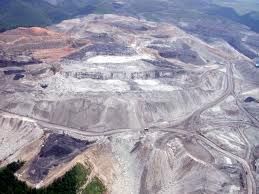
Remnants of Virginia mountain after coal industry blasts for coal veins.
3. The only people against wind are ignorant NIMBY’s and tools of the Koch Brothers/coal industry.
The Sierra Club, 350.org and other national environmental organizations have worked hard to support wind energy as the easy alternative to coal. Unfortunately wind presents its own myriad problems including serious environmental threats to delicate mountaintop ecosystems. Land based wind has only an average 10% – 17% efficiency and thus can’t replace dependence on coal, oil or gas or even make a serious dent in use.
In addition, true conservation includes community empowerment. What is the difference between the global coal industry that grew up with the tacit support of governments ignorant of its effects in the beginning and now dependent on its income today? Do we want to develop a dependance on another form of destructive, poorly performing energy that will change our natural landscape forever? Have we not learned from our past mistakes?
The mere fact that the wind industry has support from major energy producers who currently rely on coal should send a strong hint that just possibly even they don’t see wind as a threat. Instead its another area to exploit for quick profits — communities and the environment be damned: business as usual.
Please call your Senator today and tell them to support SB 99 — particularly the amended versions that will put all new transmission line construction back into the bill.
We have word that the following Senators need particular attention:
Senator David Boutin – Concerned about renewable energy and following the RPS, asked the question, “So if you’re not for wind and solar hasn’t worked in forty years, what are you for?” This question needs your answer.
Senator Martha Fuller Clark – Senator Martha Clark has a strong history of environmental concern and has been sitting on the fence on this issue. Please call Senator Fuller-Clark and let her know that wind does not represent viable green energy and that disempowering communities is not the way to move forward on renewable energy development.
Senator Bob Odell – Mr. Odell claims confidence in the SEC process and also claims that his community has “learned to live with” the turbines in Lempster on Lempster Mountain. We’d dispute Mr. Odell’s assessment of wind as being something people must get used to, also there’s no doubt that a difference exists between 12 wind turbines on a hill top and residents being surrounded with as many as 75 wind turbines in all directions.
Tell Mr. ODell that industry will come after the moratorium and that the democratic process for the approval of wind and energy projects is broken and needs serious fixing. In addition, let Mr. ODell know that tourists don’t have to “live with” wind turbines — they can just choose to go somewhere else on vacation and those considering home purchases will consider other areas.
Call your senators now! If the Senator cannot be reached, talk to their secretary as also, see if you can get their cell number. Ask their aid where they stand on the issue.
Also, for further information you can talk directly to the sponsors of the original SB 99:
Senator Jeannie Forrester : Her office aid Liz in Senator Forrester’s Concord office is very knowledgeable and helpful as well. Senator Forrester comes from the Newfound Lake region and represents land owners and businesses that thrive and prosper on the pristine environment of the western highlands and Newfound Lake region.
Senator Jeff Woodburn: A man represents the largest district in New Hampshire encompassing Coos County and more communities than any other senator, Sen. Woodburn has been out in front in the battle against Northern Pass and joins the effort against the onslaught of the wind industry as well.
From our friend Arnie over at Inzane Times, weighing in on the ugly truth about the corporate prison system and their efforts to get our Congress and state legislators to sell off justice:
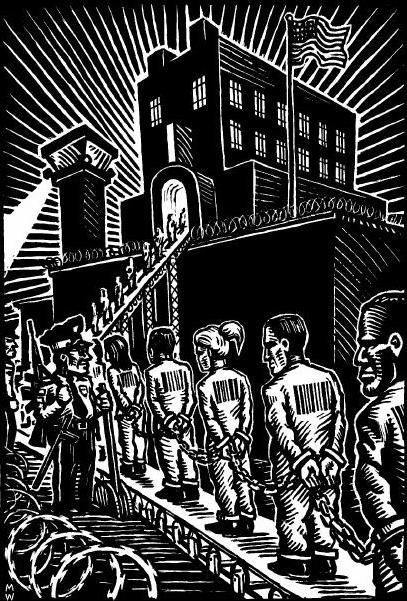
Corporate Prison Leaders Tell the Truth about Themselves
Maggie Hassan made it pretty clear during her successful campaign for governor that she has no interest in turning over control of New Hampshire’s prisons to for-profit corporations. The majority of Executive Councilors elected in November feel the same. While the State is still formally reviewing proposals from four private companies to build and operate its prisons, the chance that a contract for prison operation would be drawn up in the next two years is about as close to zero as it can get. So why have at least two of the companies (CCA and MTC) bothered to invest in lobbying services to defeat HB 443, a bill which would ban private prisons in New Hampshire?



 Progressive Action New Hampshire